Tag Archives: Curriculum Assessment tools

Attitude Scale

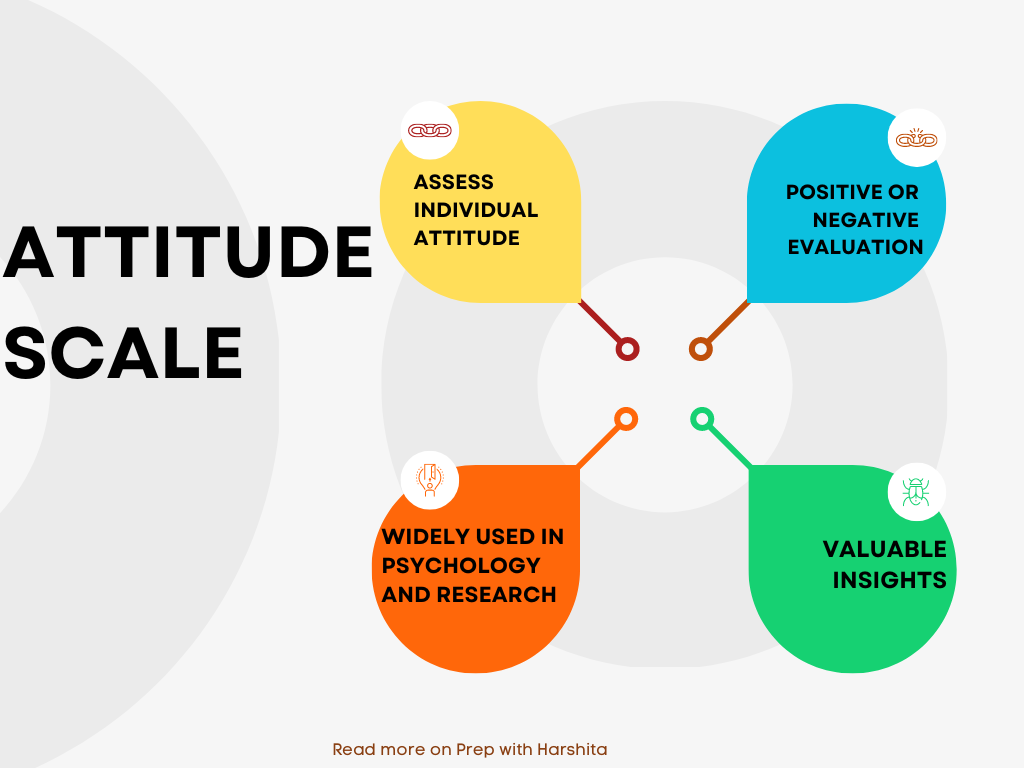
An attitude scale is a measurement tool used in psychology and social sciences to assess an individual’s attitude toward a particular object, concept, or event. Attitudes refer to the positive or negative evaluations, feelings, or beliefs that individuals hold towards an object or issue. Attitude scales typically consist of a series of statements or questions that measure the strength and direction of an individual’s attitude toward a particular subject.

There are different types of attitude scales, such as Likert scales, semantic differential scales, and Thurstone scales. Likert scales are the most commonly used type of attitude scale, and they ask respondents to rate their level of agreement or disagreement with a series of statements on a numeric scale, usually ranging from 1 to 5 or 1 to 7.

Attitude scales are widely used in research studies to measure people’s attitudes toward a variety of subjects, including political issues, social problems, health behaviors, and consumer products. The data collected from attitude scales can provide valuable insights into people’s beliefs, perceptions, and intentions, and can be used to develop effective interventions or communication strategies.

Also Visit: Prep with Harshita

There are several benefits of using attitude scales to measure individuals’ attitudes toward specific objects or issues:

  1. Standardization: Attitude scales provide standardized measures that allow researchers to compare attitudes across different groups of people and over time.
  2. Accuracy: Attitude scales provide a more accurate and reliable measurement of attitudes compared to other methods such as interviews or observations.
  3. Precision: Attitude scales can capture even subtle differences in attitudes that might be missed through other means of measurement.
  4. Objectivity: Attitude scales are less prone to subjective interpretation by researchers, which can lead to more objective and unbiased data.
  5. Efficiency: Attitude scales are a quick and efficient way to gather data from large numbers of participants.
  6. Predictive power: Attitude scales can be used to predict behavior, as attitudes are often a good predictor of future behavior.

Overall, attitude scales are a useful tool for researchers to better understand individuals’ attitudes towards different objects or issues and to gain insights into potential behaviors or decision-making processes.
Attitude Scale
Also Read: Rating Scale

Anecdotal Records

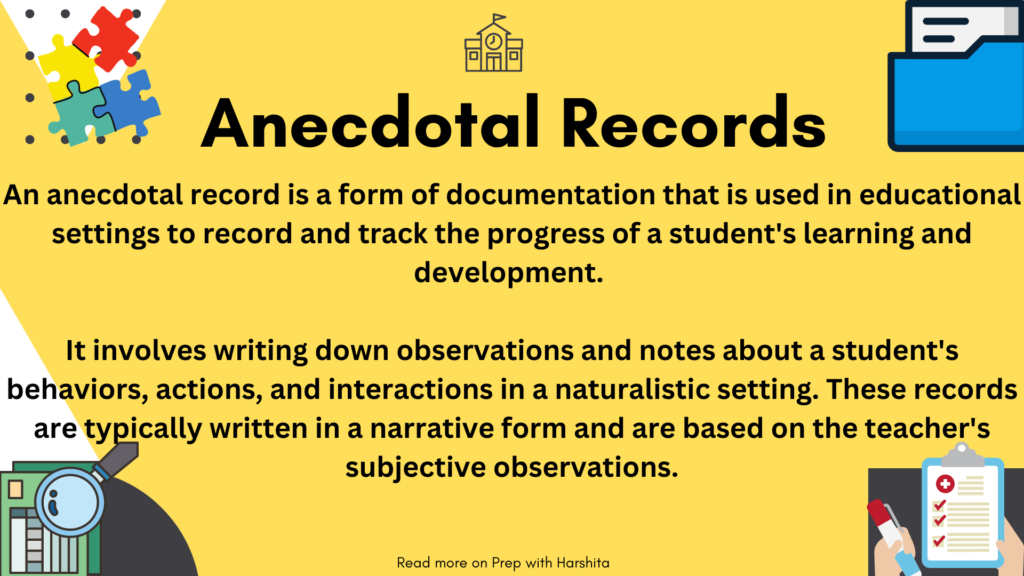
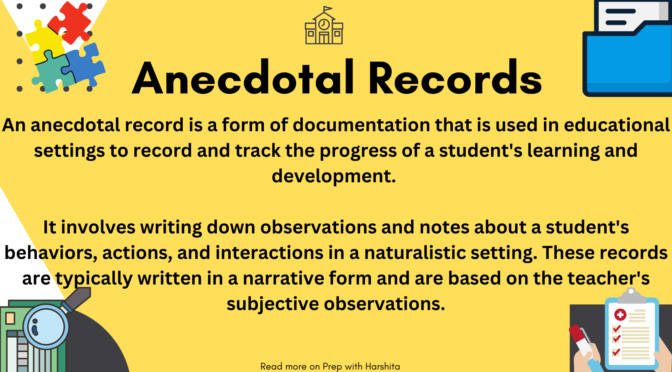
An anecdotal record is a form of documentation that is used in educational settings to record and track the progress of a student’s learning and development. It involves writing down observations and notes about a student’s behaviors, actions, and interactions in a naturalistic setting. These records are typically written in a narrative form and are based on the teacher’s subjective observations.

Anecdotal records can be useful for a variety of reasons, such as providing evidence of progress or identifying areas of concern that may require additional support or intervention. They can also be used to communicate with parents or other educators about a student’s progress.

Anecdotal records are typically kept over a period of time and may include information about a student’s academic performance, social interactions, and emotional well-being. They can be used in conjunction with other forms of assessment, such as standardized tests or performance-based assessments, to provide a more complete picture of a student’s progress.

Also Read: Rating Scale

Here are some specific ways in which anecdotal records can be useful:

  1. Identify student strengths and areas of improvement: Anecdotal records can provide insights into a student’s strengths and areas for improvement. By observing and documenting a student’s behaviors, actions, and interactions, teachers can identify areas in which a student is excelling and areas that require additional support.
  2. Monitor progress: Anecdotal records can be used to track a student’s progress over time. This can be especially useful for students with learning difficulties or behavioral issues.
  3. Inform lesson planning: It can inform lesson planning by providing information about a student’s learning style, interests, and abilities. This can help teachers tailor their lessons to better meet the needs of individual students.
  4. Communicate with parents: Anecdotal records can be used to communicate with parents about their child’s progress. By sharing observations and notes with parents, teachers can provide a more complete picture of their child’s performance and development.
  5. Evaluate program effectiveness: It can be used to evaluate the effectiveness of educational programs or interventions. By comparing the progress of students who received a specific intervention to those who did not, teachers can determine whether the intervention was successful.
Also Visit: Prep with Harshita