Role of Culture in Knowing

Culture plays a significant role in shaping what we know and how we acquire knowledge.

Our cultural background influences the way we perceive the world and the information that we are exposed to. It affects our beliefs, values, attitudes, and ways of thinking, which in turn influence our understanding of the world around us.

Seven ways in which culture plays a role in knowing:

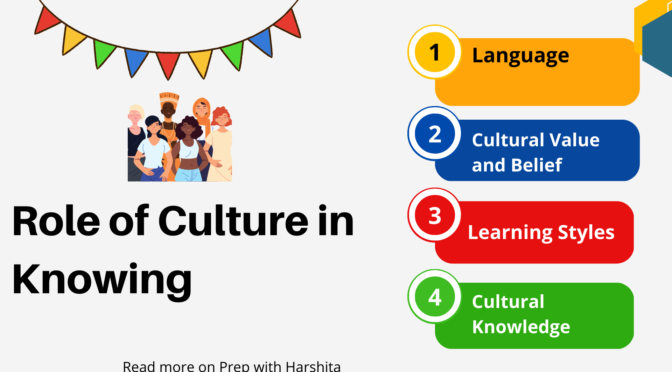
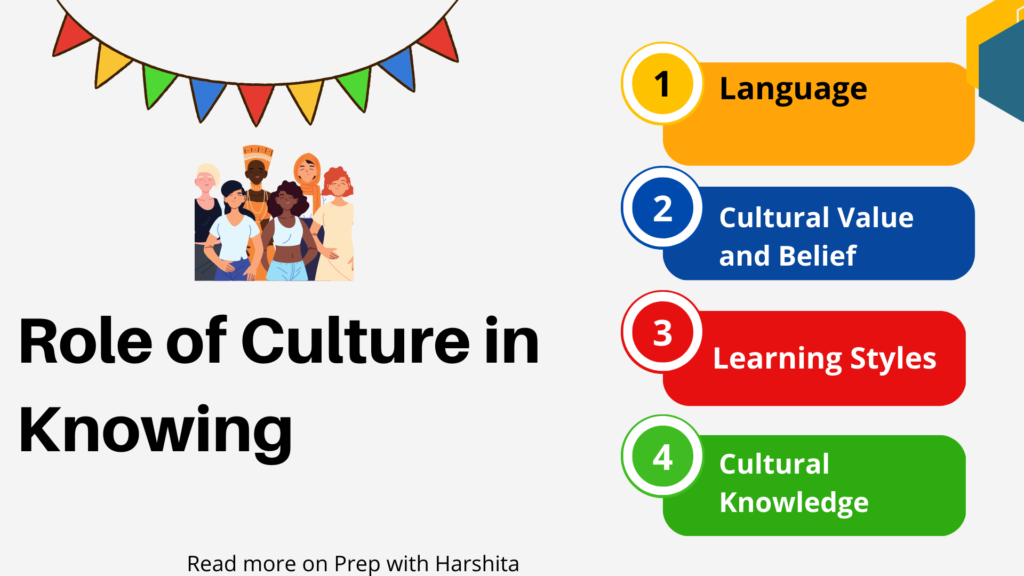
  1. The cultural background shapes our worldview: Our cultural background influences the way we perceive the world, and this shapes our beliefs, values, attitudes, and ways of thinking. For example, someone from a collectivist culture may view the world through a different lens than someone from an individualist culture.
  2. Language influences knowledge acquisition: Language affects the concepts we use to understand the world. The way a language categorizes and interprets information can influence the way we acquire knowledge. For example, some languages may have many words to describe a particular object or idea, while others may have only a few.
  3. Cultural values and beliefs influence knowledge: Cultural values and beliefs can impact the way we perceive and interpret information. For example, some cultures may place a greater emphasis on spirituality, while others may prioritize scientific knowledge.
  4. Learning styles vary across cultures: Different cultures may have different learning styles and preferences. For example, some cultures may emphasize memorization, while others may focus more on critical thinking and problem-solving skills.
  5. Culture shapes decision-making: Cultural norms and values can influence the way we make decisions. For example, some cultures may value group consensus and collaboration over individual decision-making.
  6. Cultural knowledge is passed down through generations: Cultural knowledge is often passed down from one generation to the next through language, storytelling, and other cultural practices.
  7. Culture influences creativity and innovation: Cultural diversity can lead to new and innovative ideas. Exposure to different perspectives and ways of thinking can spur creativity and innovation.
Also Visit: Prep with Harshita
Also Read: Theoretical and Practical

Difference between Theoretical and Practical

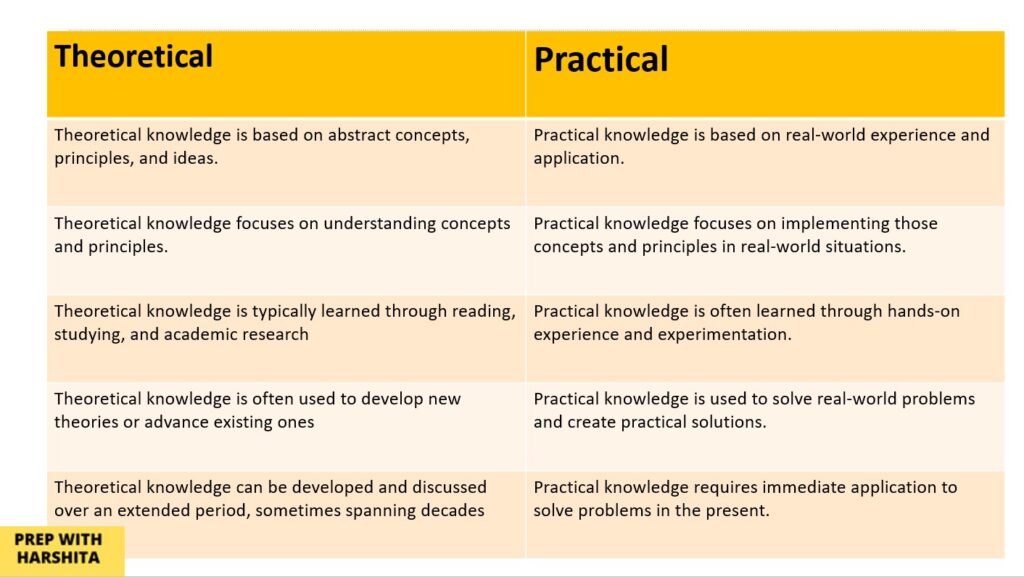
Theoretical and practical are two terms that are often used to describe different aspects of a concept or idea. The main difference between them is that theoretical refers to ideas or concepts that are based on theory or principles, whereas practical refers to things that are based on actual experience, application or implementation.

In other words, theoretical knowledge is based on abstract concepts and principles, whereas practical knowledge is based on real-world experience and application.

For example, if you were studying physics, you would learn about the theoretical principles of how gravity works. However, if you were actually designing and building a bridge, you would need practical knowledge of how to apply those principles to create a safe and structurally sound structure.

Also Read: Difference between Belief and Truth
Difference Between Theoretical and Practical
Difference between theoretical and Practical
Also Visit: Prep with Harshita

Roles of Knower and Known in Knowledge Transmission

In the context of knowledge transmission and construction, the “knower” refers to the individual or group who is seeking to acquire knowledge, while the “known” refers to the object of that knowledge.

The known can refer to any object or phenomenon that the knower is seeking to understand or learn about. It can be a scientific principle, a historical event, a cultural tradition, or any other aspect of the world around us.

The relationship between the knower and the known is a fundamental aspect of the process of knowledge acquisition. The knower relies on their own cognitive abilities and external sources of information to build an understanding of the known. This can involve a wide range of cognitive processes, including observation, inference, deduction, induction, and critical thinking.

Different frameworks place varying degrees of emphasis on the role of the knower and the known in the process of knowledge acquisition. For example, subjectivism emphasizes the importance of the knower’s subjective experiences and perspectives in shaping their understanding of the known. Objectivism emphasizes the objective, external nature of knowledge that exists independently of the knower.

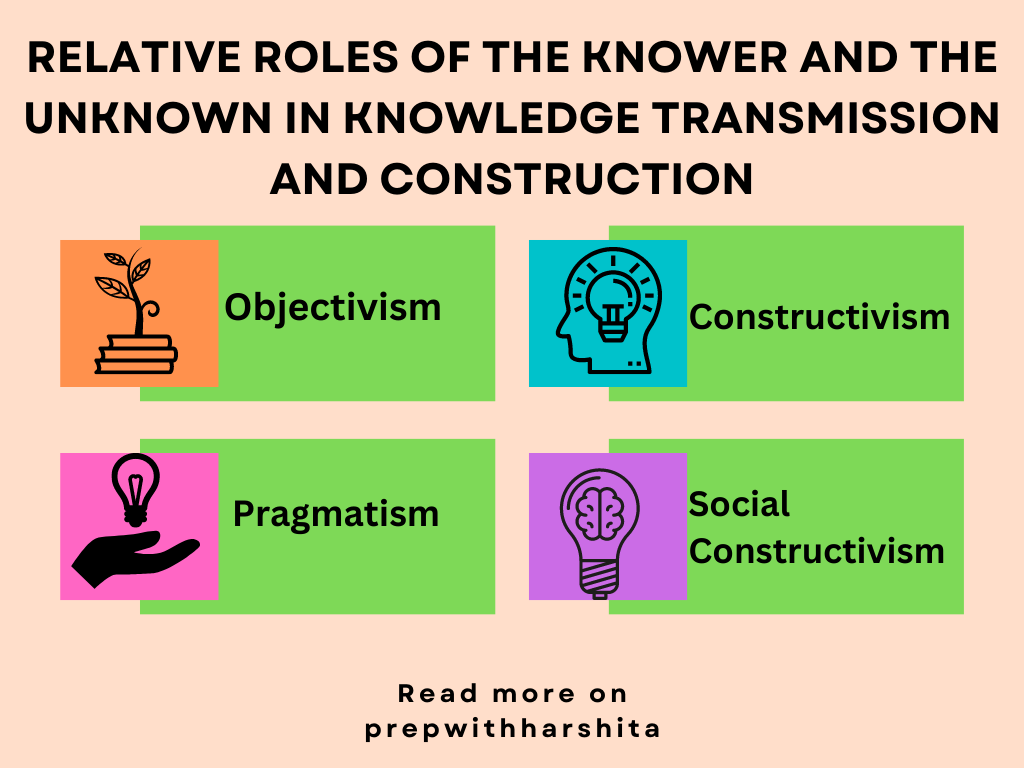
Here are some key features of the relative roles of the knower and the known in knowledge transmission and construction:

  1. Objectivism: In this framework, knowledge is viewed as objective, external, and independent of the knower. The knower’s role is to observe and gather information about the known, and to represent that information accurately. The known is seen as fixed and unchanging, and the knower’s task is to discover and describe it.
  2. Constructivism: In this framework, knowledge is viewed as subjective, internal, and constructed by the knower. The knower’s role is to actively construct knowledge based on their experiences, beliefs, and interactions with the world. The known is seen as fluid and constantly being constructed and reconstructed by the knower.
  3. Pragmatism: In this framework, knowledge is viewed as a result of the interaction between the knower and the known. The knower’s role is to bring their experiences and perspectives to the construction of knowledge, but this knowledge is tested and validated by the known through practical application. The known is seen as both objective and subjective, and the knower’s task is to negotiate the interplay between the two.
  4. Social constructivism: This framework emphasizes the role of social interaction and culture in the construction of knowledge. Knowledge is viewed as being constructed through social interaction, language, and cultural practices, not just individual cognition. The knower’s role is to participate in these social interactions. They also negotiate meaning with others in order to construct knowledge.

In summary, the relative roles of the knower and the known in knowledge transmission and construction depend on the framework one subscribes to. Each framework has its own unique features and characteristics.

Also Read: Meaning of Knowledge and Knowing
Also Visit: Prep with Harshita

Reflective Journal

A reflective journal is a type of personal writing that allows individuals to reflect on their experiences, thoughts, and feelings. It is a tool used for self-reflection and can be used for a variety of purposes, such as personal growth, learning, and professional development.

Reflective Journal Features :

  • Reflective journaling typically involves regularly writing down thoughts and reflections about experiences or events, including what was learned, how the experience affected the writer, and what the writer could do differently in the future.
  • The writing can be in any format, including freeform prose, lists, or bullet points, and can include images, sketches, or other visual aids.
  • Reflective journaling is often used in education and training settings, such as in teacher training programs, to help students and professionals develop their critical thinking and self-awareness skills.
  • It can also be used as a therapeutic tool to help individuals process and cope with difficult emotions or experiences.

Reflective Journal in Teaching :

It is a valuable tool for teachers to engage in self-reflection and professional development. By regularly writing down their thoughts and reflections about their teaching experiences, teachers can gain a deeper understanding of their own teaching practices, strengths, and areas for improvement.

Reflective journaling can be used in a variety of ways in teaching, including:

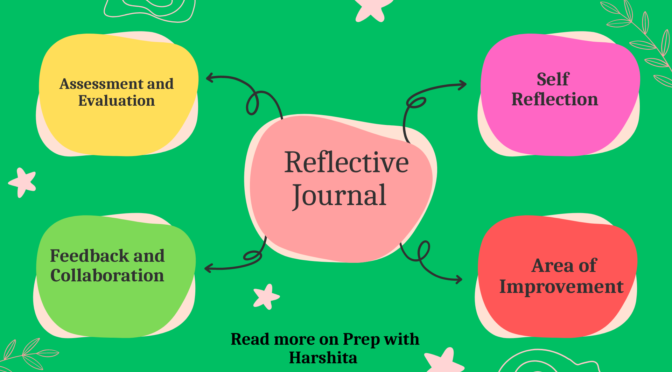
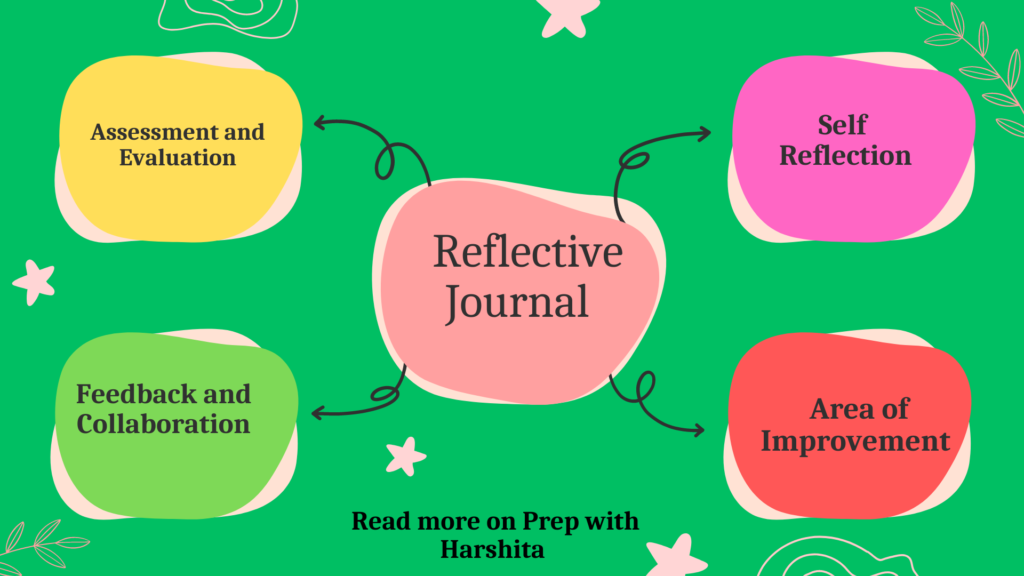
  1. Planning and preparation: Teachers can use reflective journaling to plan and prepare for their lessons. By reflecting on their previous lessons and experiences, teachers can identify areas where they need to focus their attention and plan strategies to address them.
  2. Assessment and evaluation: Teachers can use reflective journaling to assess and evaluate their own teaching practices. They can reflect on their lesson plans, instructional strategies, and student engagement, and use this information to identify areas for improvement and adjust their teaching accordingly.
  3. Professional development: Reflective journaling can be used as a tool for professional development. Teachers can reflect on their own teaching practices and identify areas where they need to improve their skills or knowledge. They can then seek out resources and opportunities for professional development to address these areas.
  4. Feedback and collaboration: Teachers can also use reflective journaling as a tool for giving and receiving feedback and collaborating with colleagues. By sharing their reflections with others, teachers can gain insights and perspectives from others and work together to improve their teaching practices.

Overall, reflective journaling can help teachers develop their self-awareness, critical thinking, and professional skills, leading to improved teaching practices and better outcomes for their students.

Also Read : Open Ended Questions
What is reflective Journal?
Also Visit : Prep with Harshita

Approaches of Educational Planning

Educational planning is a crucial process for ensuring that secondary education is delivered effectively and efficiently. Planning at the secondary level involves setting goals and objectives, identifying resources and needs, and developing programs and policies to meet those needs.

Approaches of Educational Planning :

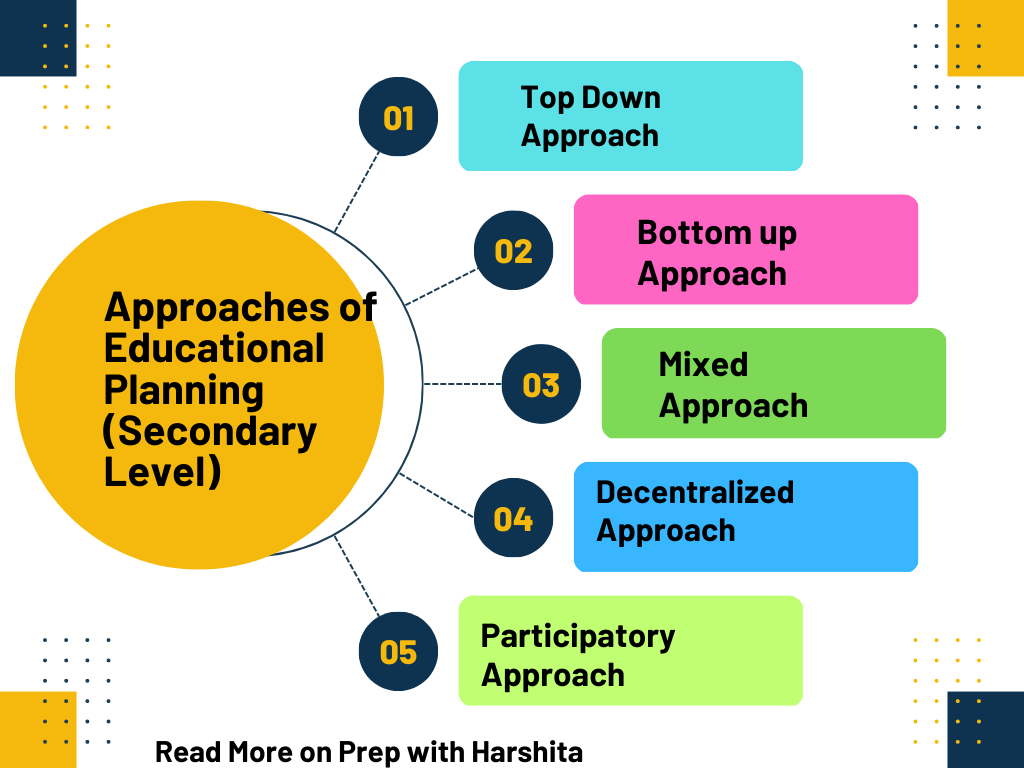
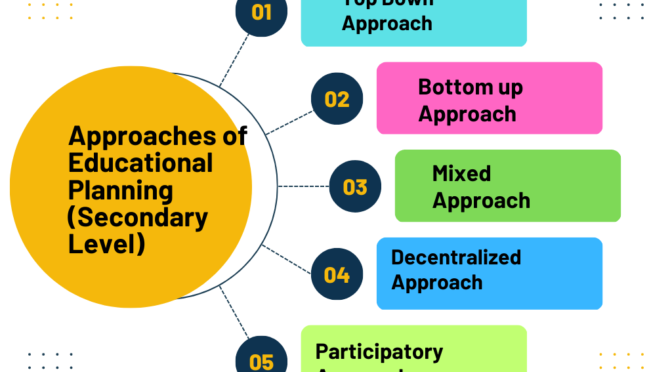
There are several approaches to educational planning at the secondary level, each with its own strengths and weaknesses. Here is a detailed explanation of these approaches:

  1. Top-down approach: The top-down approach to educational planning at the secondary level starts with the national government setting the goals and objectives for secondary education. The government provides the resources needed to achieve those goals and establishes policies and guidelines to ensure that they are met. The focus is on achieving consistency and coherence across the education system. This approach can be effective in ensuring that there is a clear national vision for secondary education and that resources are allocated in a way that supports that vision. However, it can also be inflexible and may not take into account local conditions and needs.
  2. Bottom-up approach: The bottom-up approach to educational planning at the secondary level starts at the local level and involves input from teachers, parents, and other stakeholders. The focus is on identifying the needs of students and the community and developing programs that meet those needs. This approach can be more flexible and responsive to local conditions, as it takes into account the unique characteristics of each community. However, it may not be as effective in ensuring consistency and coherence across the education system.
  3. Mixed approach: The mixed approach to educational planning combines elements of both the top-down and bottom-up approaches. It starts with a broad national framework but allows for flexibility and adaptation at the regional and local levels. This approach can help balance the need for consistency with the need for local responsiveness. It can also promote ownership and buy-in among stakeholders at all levels. However, it can be challenging to strike the right balance between national and local needs.
  4. Decentralized approach: This approach to educational planning involves devolving decision-making authority to the regional or local level. This can give local communities more control over their education systems and can lead to greater responsiveness to local needs. However, it can also lead to inconsistencies across regions and may require significant resources and capacity-building at the local level.
  5. Participatory approach: This approach to educational focus on the involvement of all stakeholders in the planning process. This includes students, parents, teachers, and community members. The goal is to build consensus and ownership of the education system among all stakeholders. This approach can be effective in ensuring that the needs of all stakeholders are taken into account. It can promote accountability and transparency. However, it can also be time-consuming and may require significant resources and capacity-building.

Each of these approaches has its own strengths and weaknesses, and the best approach will depend on the specific context and needs of the education system. A well-designed educational planning process will consider the strengths and limitations of each approach and tailor the process accordingly. Ultimately, the goal of educational planning at the secondary level should be to ensure that all students have access to high-quality education that prepares them for success in life.

Also Visit: Prep with Harshita
Also Read: Manpower Planning

Make your learning journey easy and much interesting