Tag Archives: m.ed

Assessment Techniques of Personality

There are many known assessment techniques for personality. Assessing personality can be done using a variety of techniques, depending on the specific goal of the assessment and the context in which it is being conducted.

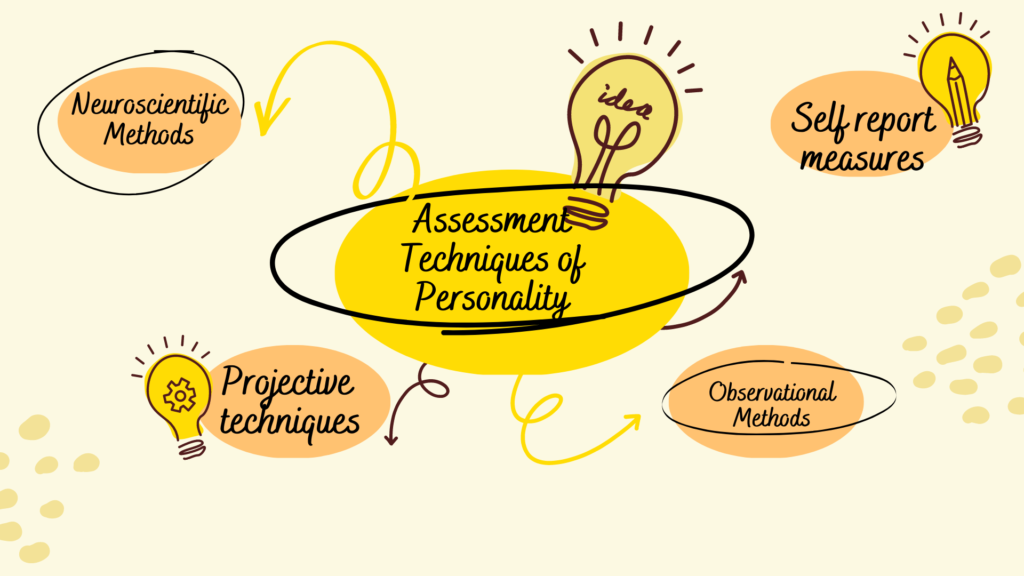
Here are some common techniques for personality assessment:

  1. Self-Report Measures: Self-report measures are questionnaires or inventories that individuals complete themselves. These measures ask individuals to respond to questions about their attitudes, behaviors, and emotions. Examples include the Big Five Inventory and the Minnesota Multiphasic Personality Inventory.
  2. Observational Methods: Observational methods involve observing an individual’s behavior in natural or controlled settings. This can include structured observations, such as laboratory experiments, or unstructured observations, such as watching how someone behaves in a social setting.
  3. Behavioral Assessments: Behavioral assessments involve assessing an individual’s behavior in specific situations. This can include role-playing exercises or tasks designed to elicit certain behaviors.
  4. Neuroscientific Methods: Neuroscientific methods involve using brain imaging techniques, such as functional magnetic resonance imaging (fMRI), to study the neural correlates of personality traits.
  5. Projective Techniques: Projective techniques involve presenting individuals with ambiguous stimuli, such as inkblots or incomplete sentences, and asking them to respond. The idea is that the individual’s responses reveal unconscious aspects of their personality. Examples include the Rorschach Inkblot Test and the Thematic Apperception Test.
Also Visit: Prep with Harshita

Projective techniques are a type of personality assessment that involve presenting individuals with ambiguous stimuli, such as pictures, words, or incomplete sentences, and asking them to respond.

Here are some examples of commonly used projective techniques in personality assessment:
  1. Rorschach Inkblot Test: This test involves presenting individuals with a series of inkblots and asking them to describe what they see. The responses are analyzed based on various factors, such as the content of the response, the location of the response, and the level of detail provided.
  2. Thematic Apperception Test (TAT): This test involves presenting individuals with a series of pictures and asking them to create a story based on the pictures. The responses are analyzed based on various factors, such as the themes that emerge in the story and the emotions expressed in the story.
  3. Sentence Completion Test: This test involves presenting individuals with incomplete sentences and asking them to complete them. The responses are analyzed based on various factors, such as the content of the response and the level of detail provided.
  4. Draw-a-Person Test: This test involves asking individuals to draw a person and then asking them to describe the person they have drawn. The responses are analyzed based on various factors, such as the level of detail provided and the emotions expressed in the description.
Assessment Techniques of Personality
Also read: Defense Mechanism in Psychology

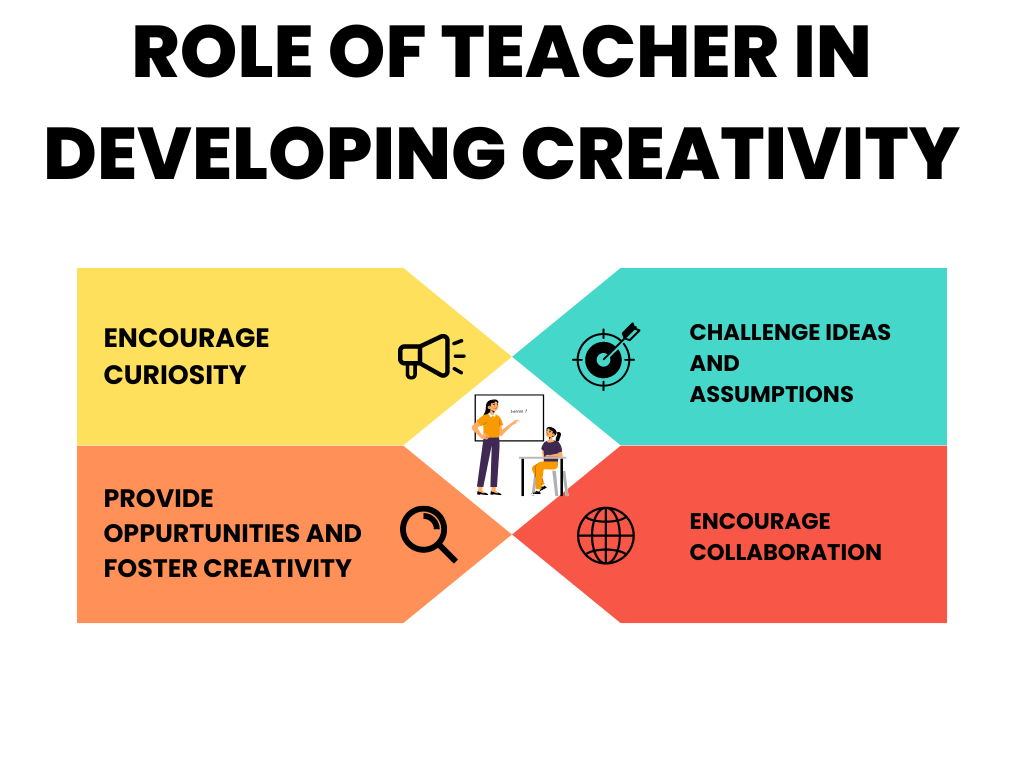
Role of Teacher in Developing Creativity

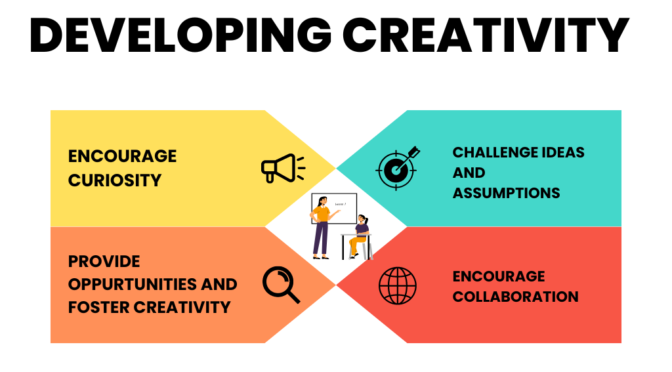
The role of a teacher in developing creativity and critical thinking in students is a very important aspect. Here are some ways in which a teacher can promote creativity and critical thinking among students:

  1. Encourage curiosity: Teachers should create a safe and supportive environment where students feel free to ask questions, explore their interests and pursue their curiosity. They should encourage students to question and analyze the information presented to them.
  2. Challenge ideas and assumptions: Teachers should encourage students to question assumptions and look at problems from multiple perspectives. They should provide opportunities for students to challenge existing ideas and think outside the box.
  3. Foster creativity: Teachers should provide opportunities for students to express themselves creatively. They can do this through art projects, creative writing assignments, and other activities that encourage students to think beyond the conventional.
  4. Provide feedback: Teachers should provide constructive feedback that encourages students to reflect on their work and make improvements. Feedback should be specific and focused on the development of critical thinking skills.
  5. Encourage collaboration: Teachers should encourage students to work together in groups to solve problems and share ideas. Collaboration promotes critical thinking and encourages creativity by exposing students to a diverse range of perspectives and ideas.
  6. Model critical thinking: Teachers should model critical thinking by asking open-ended questions, using evidence to support their arguments, and encouraging students to challenge their own assumptions.

Overall, the role of a teacher in developing creativity and critical thinking is to provide opportunities for students to explore and express themselves, challenge assumptions, and develop the skills needed to think critically about the world around them.

Also Read: Type of Motivation
Check the Youtube Channel: Prep with Harshita

Process of Institutional Planning in India

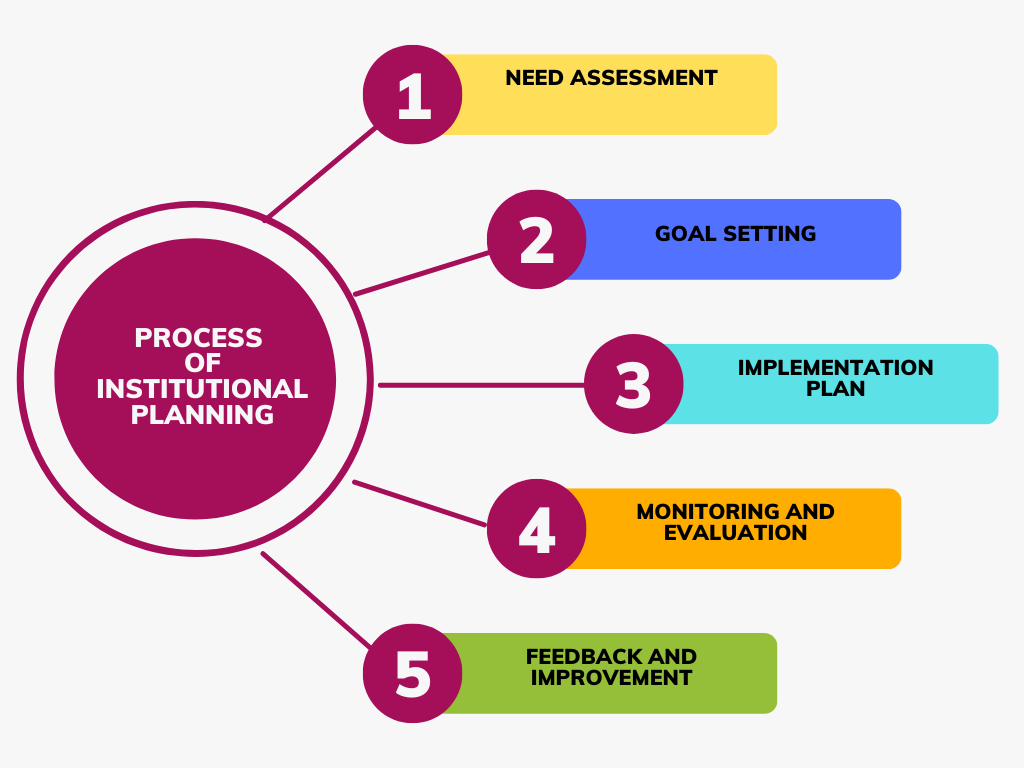
The process of institutional planning in India involves several steps and stages. Here is a general overview:

  1. Needs Assessment: This is the first stage in the planning process, where the institutions identify the needs and gaps in their existing resources, infrastructure, and manpower. It also involves identifying the needs of the stakeholders such as students, faculty, and the community.
  2. Goal Setting: Once the needs are identified, the institution sets goals and objectives to meet those needs. These goals must be specific, measurable, achievable, relevant, and time-bound (SMART).
  3. Resource Mobilization: The institution then identifies the resources required to achieve its goals and objectives. This includes financial resources, human resources, infrastructure, and technology.
  4. Implementation Plan: The institution then develops an implementation plan, which outlines the specific steps, activities, and timelines required to achieve its goals and objectives. This plan must be comprehensive and include details on budget, human resources, infrastructure, and technology.
  5. Monitoring and Evaluation: This stage involves continuous monitoring and evaluation of the implementation plan to ensure that the goals and objectives are being met. This includes regular review of progress, assessment of outcomes, and identification of any issues or challenges.
  6. Feedback and Improvement: Based on the results of the monitoring and evaluation, the institution makes necessary changes and improvements to its implementation plan to ensure that it is effective in achieving its goals and objectives.

Overall, the process of institutional planning in India is a dynamic and ongoing process, which requires continuous review and improvement to ensure that institutions are meeting the needs of their stakeholders and contributing to the overall economic development of the country.

Education and Economic Development

Education and economic development are closely interrelated. Education is a crucial factor in the economic development of any country. A well-educated population is vital for economic growth, productivity, and competitiveness in the global economy. Education plays a critical role in preparing individuals for the workforce, enhancing their skills, and enabling them to adapt to new technologies and industries.

There are several ways in which education can contribute to economic development:

  1. Increased productivity: Education enables individuals to acquire the skills, knowledge, and abilities needed to perform their jobs more efficiently and effectively, which results in increased productivity and higher economic output.
  2. Innovation: Education plays a crucial role in promoting innovation and creativity, which are essential for economic growth. Well-educated individuals are more likely to develop new ideas and technologies, which can lead to new products, services, and industries.
  3. Entrepreneurship: Education can also promote entrepreneurship and self-employment, which are essential for economic development. Well-educated individuals are more likely to start their own businesses, which can create jobs and contribute to economic growth.
  4. Improved governance: Education can lead to better governance and more effective public institutions, which are essential for economic development. Well-educated individuals are more likely to participate in the political process, hold their leaders accountable, and advocate for policies that promote economic growth.

Overall, education is a critical component of economic development. Governments and policymakers must invest in education to ensure that their citizens have the skills, knowledge, and abilities needed to succeed in the global economy.

Education and Economic Development

Also Visit : Prep with Harshita

Cost Analysis in Education

Cost analysis is an important tool used in education to evaluate the financial factors of educational programs, policies, and interventions. It involves a systematic assessment of the resources needed to implement an educational program or policy and the possible benefits that it can generate.

The primary and main objective of cost analysis in education is to provide decision-makers with accurate and relevant information to make decisions about the allocation of resources. This information can help policymakers and decision-makers to understand the best use of available resources, identify cost-effective strategies, and increase the benefits of educational programs and policies.

It typically involves identifying all the costs associated with the educational program or policy, including direct costs such as salaries, materials, and equipment, and indirect costs such as administrative overhead. Once the costs are identified, they are estimated to determine the amount of each cost item and the total cost of implementing the program or policy.

The cost-effectiveness and cost-benefit analysis are also conducted in education to evaluate and understand the potential benefits of the program or policy and determine whether the benefits justify the costs. These analyses require a comparison of the costs with the outcomes of the program or policy, such as improved learning outcomes or increased student engagement.

Overall, It is an essential tool in education to ensure and maintain the efficient and effective use of resources and to achieve the desired educational outcomes.

Cost Analysis in Education