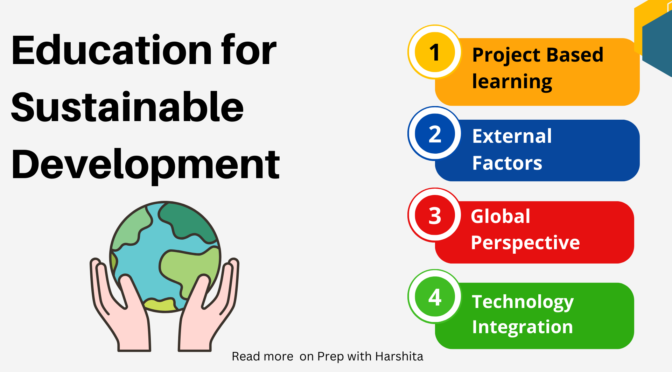
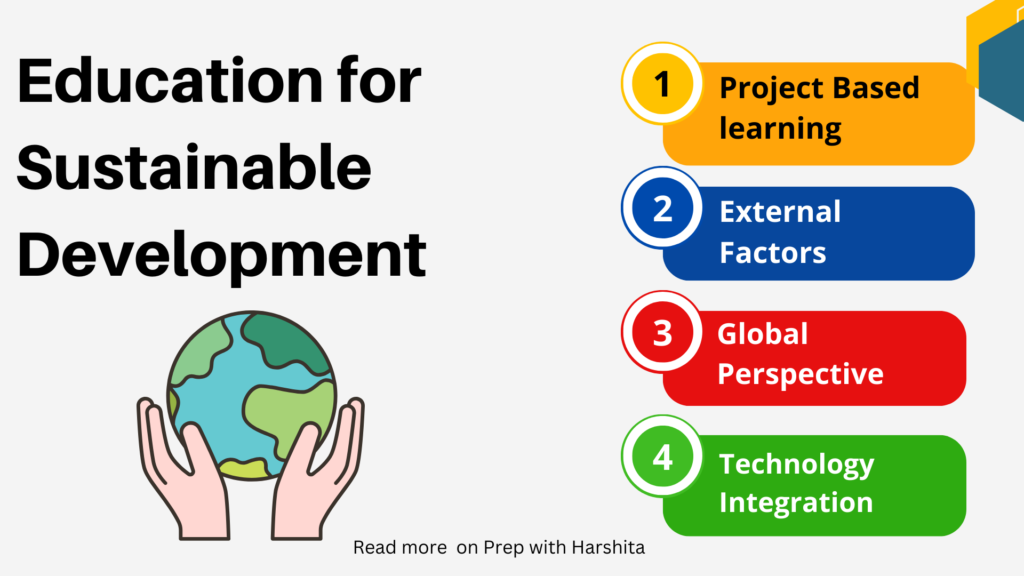
Education for Sustainable Development (ESD) is an approach to learning that emphasizes the interconnectedness of social, economic, and environmental aspects of development. ESD seeks to equip individuals with the knowledge, skills, attitudes, and values necessary to contribute to sustainable development.
Approaches and strategies for implementing Education for Sustainable Development:
Interdisciplinary Learning :
Approach: Integrate sustainability concepts across various disciplines, and help in overall understanding of environmental, social, and economic issues.
Strategy: Develop interdisciplinary courses and projects that explore real-world problems from multiple perspectives, encouraging students to see the interconnectedness of issues.
Community Engagement:
Approach: Connect learning to community issues and involve students in local sustainability initiatives.
Strategy: Establish partnerships with local communities, businesses, and organizations to create learning opportunities that address community needs while promoting sustainability.
Experimental and Project-Based Learning :
Approach: Emphasize hands-on experiences and practical applications of sustainable practices.
Strategy: Engage students in projects that address local sustainability challenges, providing opportunities for active learning, problem-solving, and collaboration.
Global Perspective :
Approach: Foster a sense of global citizenship and responsibility by exploring global sustainability challenges.
Strategy: Integrate international perspectives into the curriculum, encourage collaboration with schools in different countries, and explore global issues such as climate change and biodiversity loss.
Education outside the classroom :
Approach: Emphasize learning in natural environments and through outdoor activities.
Strategy: Conduct field trips, nature walks, and outdoor experiential learning activities to connect students with the natural world and enhance their appreciation for environmental sustainability.
Technology Integration:
Approach: Use technology for learning and promoting sustainability.
Strategy: Use online resources, virtual simulations, and educational apps to enhance understanding of sustainability issues, and showcase innovative technologies that contribute to sustainable development.
Education plays a crucial role in fostering global peace and understanding. Here are several ways in which education contributes to promoting peace on a global scale:
Let’s Discuss a few ways:
Cultural Understanding: Education helps individuals gain a better understanding of different cultures, traditions, and perspectives. By learning about diverse societies and their histories, people develop empathy and respect for others’ ways of life. This understanding is helpful in peaceful coexistence.
Promotion of Tolerance: Inclusive education teaches tolerance and acceptance of diversity. When individuals learn about different religions, ethnicities, and backgrounds, it reduces prejudice and discrimination, creating an environment where people are more open-minded and accepting of one another.
Conflict Resolution Skills: Education can provide individuals with the skills necessary for conflict resolution. Teaching negotiation, communication, and diplomacy in educational settings equips people to address conflicts peacefully, whether at a personal, community, or international level.
Human Rights Education: Integrating human rights education into curricula helps individuals understand the importance of respecting each other’s rights. It empowers people to stand against injustice and promotes a sense of responsibility for creating a world where everyone can live with dignity and equality.
Global Citizenship: Education can cultivate a sense of global citizenship, emphasizing the interconnectedness of the world. Encouraging individuals to see themselves as part of a larger global community promotes a shared responsibility for addressing global challenges, including poverty, inequality, and environmental issues.
Media Literacy: Educating individuals about media literacy helps them critically analyze information and avoid misinformation. This skill is crucial for preventing the spread of propaganda and stereotypes, which can contribute to tensions and conflicts.
Environmental Sustainability: Education about environmental issues fosters an understanding of the importance of sustainable practices. As environmental challenges often transcend borders, a global commitment to sustainability can contribute to peaceful cooperation among nations.
Technology and Communication: Education in technology and communication enhances global connectivity. Access to information and the ability to communicate across borders can help in collaboration, and exchange of ideas, contributing to mutual understanding and cooperation.
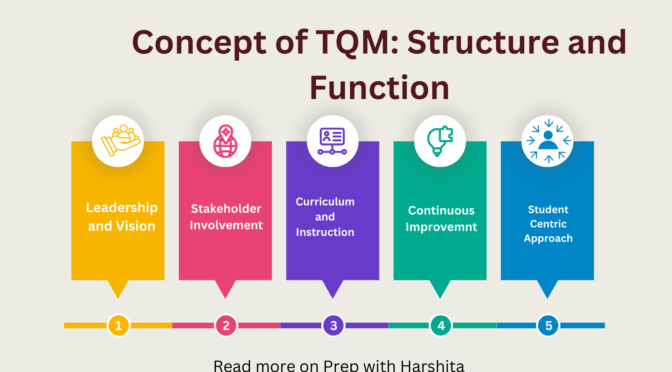
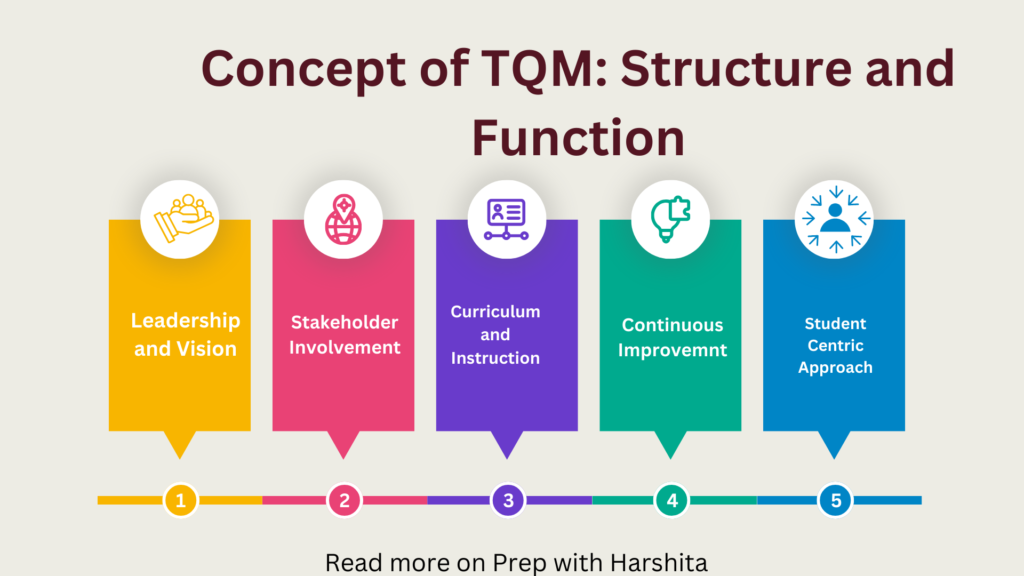
Total Quality Management (TQM) is an approach that focuses on continuous improvement in all aspects of an organization’s operations, products, and services. While TQM is often associated with business and industry, its principles can be applied to educational institutions, including schools. Implementing TQM in schools involves structuring and organizing various aspects of the educational system to enhance overall quality.
Here’s a breakdown of the concept of TQM in the context of a school, covering both structure and function:
Leadership and Vision:
Structure: The school leadership, including principals and administrators, plays a crucial role in implementing TQM. They need to establish a clear vision for quality education and communicate it effectively.
Function: Leaders should promote a culture of continuous improvement, set high expectations for staff and students, and provide the necessary resources and support to achieve quality goals.
Stakeholder Involvement:
Structure: Establish committees or task forces involving teachers, parents, students, and community members to participate in decision-making processes related to school quality.
Function: Encourage open communication and collaboration among stakeholders. Collect feedback regularly and involve the community in setting educational objectives.
Curriculum and Instruction:
Structure: Develop and regularly review the curriculum that aligns with educational standards and meets the diverse needs of students.
Function: Implement effective teaching methods, provide professional development opportunities for teachers, and use data for teaching improvements. Focus on individualized learning to address the unique needs of each student.
Continuous Improvement:
Structure: Establish a systematic process for collecting and analyzing data related to student performance, teacher effectiveness, and overall school operations.
Function: Use data-driven decision-making to identify areas for improvement.
Student-Centric Approach:
Structure: Create a student-centered environment that focuses on personalized learning, student engagement, and holistic development.
Function: Alter educational experiences to individual student needs, provide support services, and create a positive and inclusive school culture for growth.
Quality Assessments:
Structure: Design and apply a comprehensive assessment system that includes formative and summative evaluations.
Function: Use assessments to measure student learning outcomes, identify areas for improvement, and inform instructional decisions. Ensure that assessments align with the school’s educational goals and standards.
Parental and Community Engagement:
Structure: Involve parents and the community in school activities and decision-making processes.
Function: Foster partnerships with parents and the community to support students’ academic and social development. Communicate transparently about school performance and involve external stakeholders in improvement initiatives.
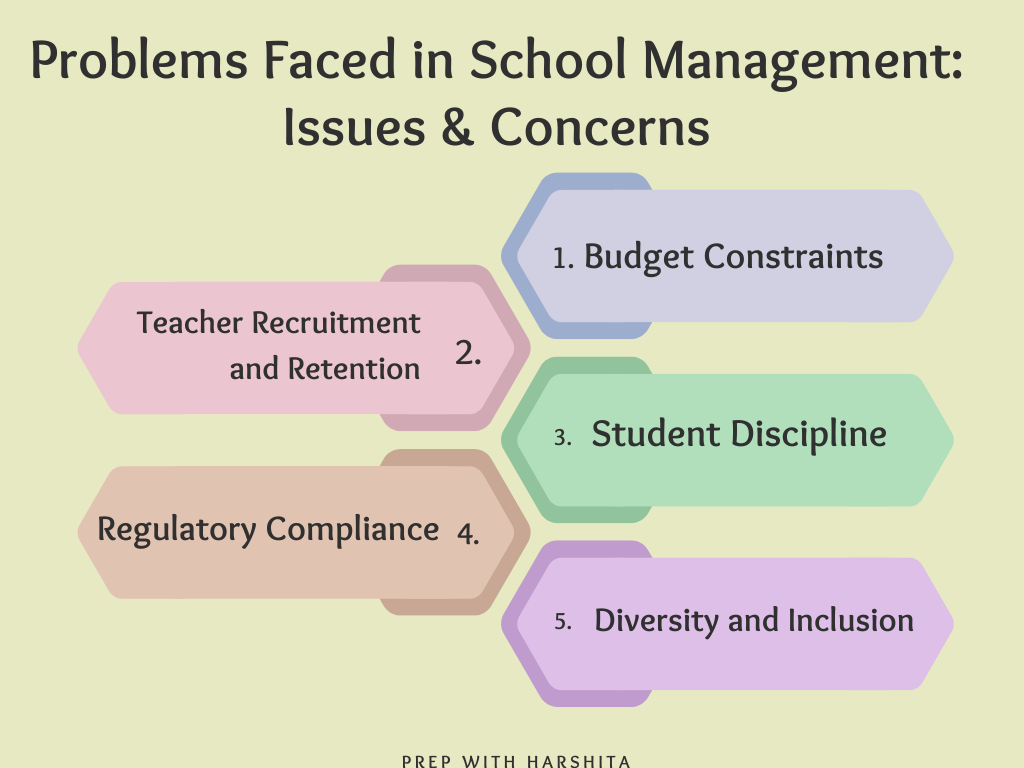
School management faces various challenges and concerns that can impact the overall functioning and effectiveness of educational institutions. These issues can arise at different levels, including administrative, academic, and operational.
Here are some common problems faced in school management:
Budget Constraints:
Limited financial resources can restrict the implementation of necessary programs and improvements.
Adequate funding is crucial for maintaining infrastructure, updating technology, and providing quality education.
Teacher Recruitment and Retention:
Attracting qualified and experienced educators can be challenging, leading to a shortage of skilled teaching staff.
Retaining teachers is also an issue, as burnout, inadequate compensation, and challenging working conditions can contribute to many problems.
Student Discipline:
Maintaining a positive and disciplined learning environment can be difficult.
Issues such as bullying, misconduct, and disruptive behavior can negatively impact the educational experience for both students and teachers.
Technological Integration:
Adapting to and incorporating new technologies into the curriculum can be a challenge for schools.
Ensuring that teachers are adequately trained to use technology effectively is essential for successful integration.
Assessment and Testing:
Balancing the need for assessments with the risk of over-testing is a common concern.
Ensuring that assessments accurately reflect students’ abilities and progress is essential for meaningful evaluation.
Regulatory Compliance:
Keeping up with changing educational policies and regulations can be demanding for school administrators.
Failure to comply with regulations may lead to legal issues and affect the school’s reputation.
Diversity and Inclusion:
Addressing the needs of a diverse student population can be challenging.
Providing a supportive environment for students with different learning styles, abilities, and cultural backgrounds requires ongoing effort.
Tuition and Fees: Outline the fees charged to students for tuition, registration, and other educational services.
Grants and Aid: Include any grants, scholarships, or financial aid received from external sources.
Fundraising: Detail funds raised through school events, donations, and community fundraising efforts.
Capital Budget:
Infrastructure Investments: Allocate funds for the construction, maintenance, and improvement of school buildings and facilities.
Technology Upgrades: Budget for the purchase and maintenance of technology infrastructure, including computers, software, and other educational tools.
Sources of Income:
Government Funding :
Educational Grants: Specify funds received from government bodies earmarked for educational purposes.
Subsidies: Outline any subsidies provided by local or national governments to support educational initiatives.
Student Contribution:
Tuition Fees: Categorize fees based on grade levels or programs, including any discounts or special considerations.
Extracurricular Fees: Detail charges for sports, arts, or other extracurricular activities.
Donation and Fundraising :
Individual Donations: Specify contributions from parents, alumni, and other individual donors.
Corporate Sponsorships: Include sponsorships from local businesses or corporations.
Investments:
Endowment Funds: Highlight income generated from investments made using endowment funds.
Interest and Dividends: Include any returns from investments made using surplus funds.
Expenditure:
Personnel Costs:
Salaries and Benefits: Break down expenses related to faculty and staff salaries, as well as benefits such as health insurance and retirement contributions.
Professional Development: Allocate funds for ongoing training and development programs for educators.
Operational Expenses:
Utilities: Budget for electricity, water, and other utility costs associated with running the school.
Maintenance: Include costs for routine maintenance, repairs, and upkeep of school buildings and grounds.
Educational Resources:
Textbooks and Supplies: Detail expenses related to purchasing textbooks, educational materials, and classroom supplies.
Technology: Allocate funds for the acquisition and maintenance of computers, software, and other technology resources.
Administrative Costs:
Office Supplies: Include expenses for office supplies, stationery, and administrative materials.
Administrative Staff Salaries: Account for salaries and benefits of administrative personnel.
Safety and Security:
Security Personnel: Detail expenses for hiring security staff or contracting with security services.
Safety Measures: Include costs for safety equipment, emergency preparedness, and training programs.
Transportation:
School Buses: Budget for the operation and maintenance of school buses or contracted transportation services.
Transportation Staff: Include salaries and benefits for transportation staff.