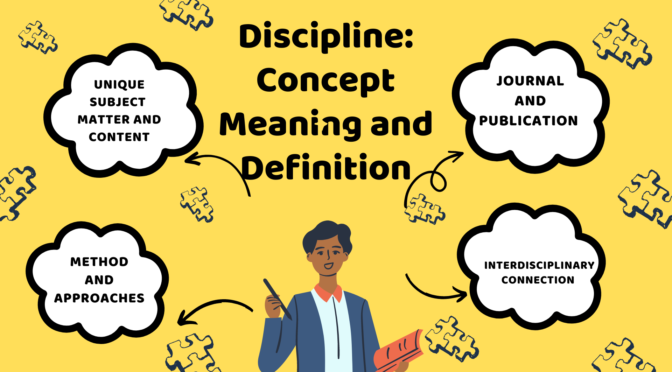
Discipline: Concept Meaning and Definition

Discipline, in the context of academic study, refers to a branch of knowledge or a field of study that is characterized by a specific focus, methodology, and set of principles. It provides a framework for organizing and understanding information, and it often involves a systematic approach to acquiring knowledge. Disciplines are typically organized into subjects, which are more specific areas of study within a broader discipline.

Concept of Discipline :

Discipline consists of the rules, methods, and principles that define a particular field of study. It represents a way of organizing and categorizing knowledge to facilitate understanding and exploration within a specific domain. Disciplines often have their own unique terminology, theories, and methodologies.

Meaning of Discipline :

The meaning of discipline in the academic context is closely related to a particular branch of knowledge or an organized field of study. It involves following a set of rules, principles, and methods that guide research, learning, and practice within that field. For example, physics, psychology, and sociology are all disciplines that focus on specific aspects of the world.

Definition of Discipline:

Discipline can be defined as a branch of knowledge that is formally taught, researched, and practiced. It is characterized by its own set of theories, methods, and standards. Disciplines provide a structured framework for understanding and addressing specific phenomena or questions. For instance, biology is the discipline that studies living organisms and their interactions.

Characteristics of Discipline in Subject Understanding:

Specialization: Disciplines often involve specialization in a specific area of knowledge. For example, within the broader discipline of science, there are specialized fields like physics, chemistry, and biology.

Methodology: Each discipline has its own methodologies for conducting research and inquiry. The methods used in physics, for instance, differ from those used in history or psychology.

Terminology: Disciplines have their own unique vocabulary and terminology. This specialized language helps scholars communicate effectively within their field.

Foundational Theories: Disciplines are built upon foundational theories or principles that provide a basic understanding of that field.

Standards and Ethics: Disciplines often have established standards and ethical guidelines that researchers and practitioners are expected to follow. These standards contribute to the credibility and reliability of the discipline.

Interdisciplinary Connections: While disciplines are distinct, there are often interdisciplinary connections, where knowledge from one discipline can inform or enhance understanding in another.

Also Read: Understanding Discipline and Subjects

Discipline : Concept , Meaning and Definition

Also Visit: Prep with Harshita
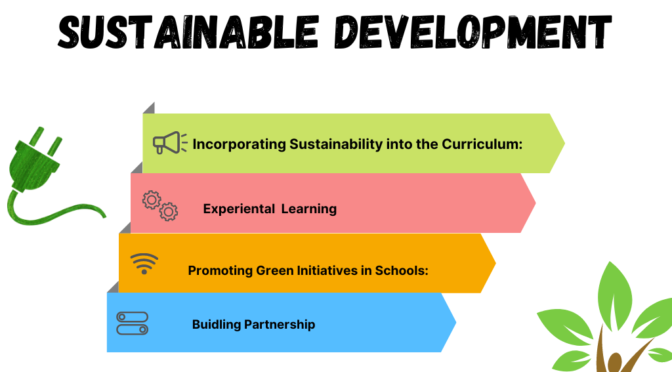
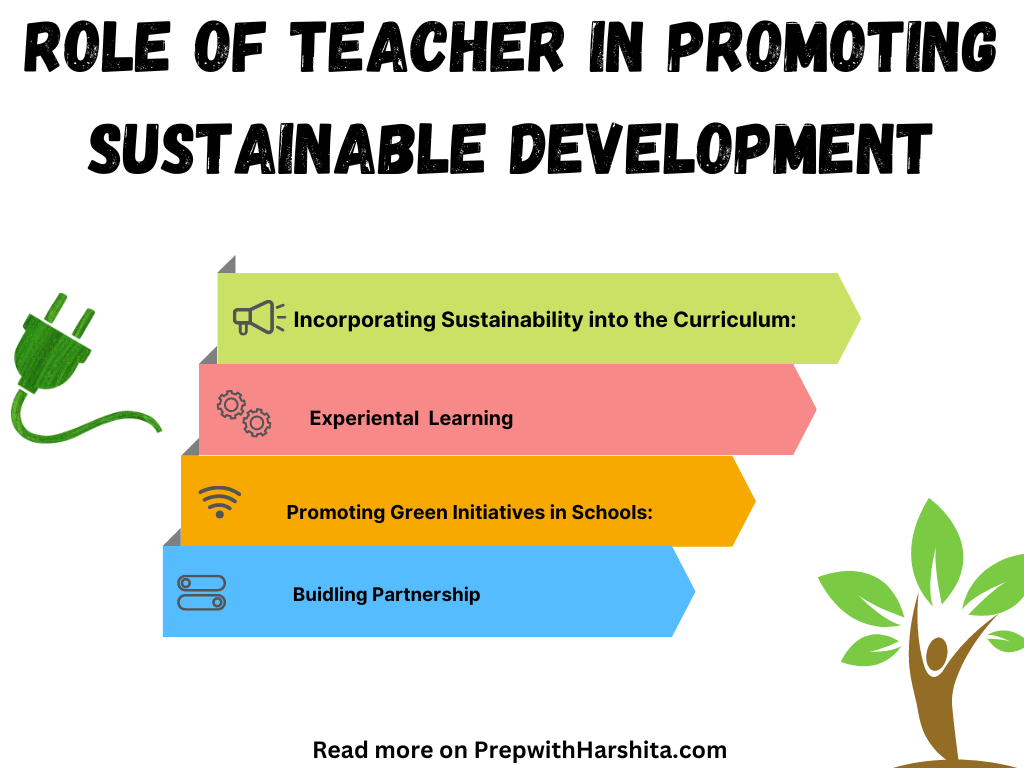
Role of teacher in promoting sustainable development

Teachers play a crucial role in promoting sustainable development, as they are responsible for shaping the knowledge, values, and attitudes of the next generation. Here are some key ways in which teachers can contribute to sustainable development:

Incorporating Sustainability into the Curriculum:

Integrate sustainability concepts into the curriculum across various subjects. Focus on the interconnectedness of social, economic, and environmental issues, providing students with a holistic understanding of sustainable development.

Experiential Learning:

Implement hands-on, experiential learning activities that allow students to engage with sustainability issues directly. Field trips, environmental projects, and community service initiatives can enhance their understanding of sustainable practices.

Promoting Green Initiatives in Schools:

Advocate for and participate in green initiatives within the school community. This could include promoting recycling programs, energy efficiency measures, and sustainable practices within the school infrastructure.

Building Partnerships:

Build partnerships with local environmental organizations, businesses, and community groups. Collaborating with external organizations which can provide additional resources, expertise, and opportunities for students to engage in sustainability projects.

Fostering a Sense of Responsibility:

Instill a sense of responsibility for the environment in students. Teachers can model sustainable behaviors, such as waste reduction, energy conservation, and responsible consumption, and encourage students to adopt these practices in their daily lives.

Also Read : Education for Global Peace

Role of teacher in promoting sustainable development

Also Visit: Prep with Harshita

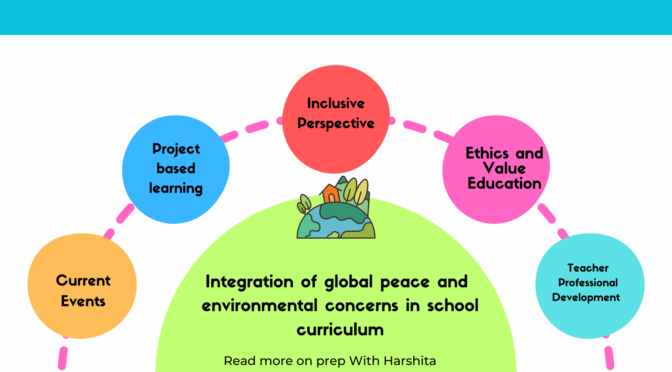
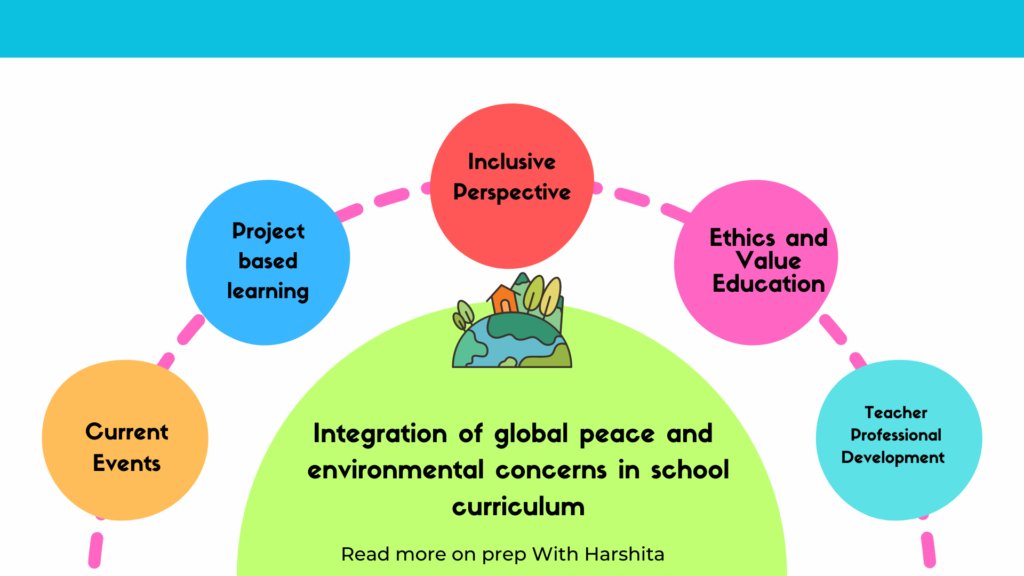
Integration of global peace and environmental concerns in school curriculum

Integration of global peace and environmental concerns into school curriculum is important for fostering a generation of responsible and environmentally conscious citizens. Here are some suggestions on how to achieve this integration:

Interdisciplinary Approach:

Design interdisciplinary courses that combine elements of environmental science, geography, history, and social studies to provide a broader understanding of global peace and environmental issues.

Incorporate Current Events:

Include discussions on current global peace and environmental issues in various subjects. This can be achieved through regular updates, news articles, and case studies.

Project-Based Learning:

Implement project-based learning initiatives that require students to engage in real-world problem-solving related to global peace and environmental concerns. This could involve community projects, research assignments, or collaborative initiatives with local environmental organizations.

Inclusive Perspectives:

Ensure that curricula represent different perspectives on global peace and environmental issues. Include voices from different cultures and communities to provide a well-rounded understanding of the challenges and potential solutions.

Ethics and Values Education:

Integrate discussions on ethical considerations related to environmental practices and global peace. Encourage students to think critically about values and ethics.

Partnerships with NGOs and Environmental Organizations:

Collaborate with non-governmental organizations (NGOs) and environmental organizations to provide students with opportunities for hands-on experiences, field trips, and exposure to real-world initiatives.

Teacher Professional Development:

Provide ongoing professional development for teachers to keep them informed about current global peace and environmental issues. This ensures that educators are equipped to facilitate meaningful discussions and activities in the classroom.

Technology Integration:

Use technology to connect students with global issues. Virtual conferences, online resources, and collaborative projects with students from other parts of the world can help broaden their perspectives.

Also Read: Education for Sustainable Development

Integration of global peace and environmental concerns in school curriculum

Also Visit: Prep with Harshita

Digital storytelling and Story Boarding

Digital Storytelling:

Digital storytelling is the use of digital tools and technologies to create and share narratives. It goes beyond traditional storytelling by incorporating multimedia elements such as images, audio, video, and interactive elements.

  1. Multimedia Elements:
    • Digital stories often combine various media elements like images, audio, video clips, music, and text. This multimedia approach enhances the storytelling experience and engages multiple senses.
  2. Interactive Features:
    • Digital storytelling may include interactive features. This can include clickable links, buttons, or other interactive elements that enable the viewer to choose different paths within the narrative.
  3. Audience Engagement:
    • Digital storytelling encourages active engagement from the audience. Viewers can interact with the story, providing a more personalized experience.
  4. Accessibility:
    • Digital stories can be easily shared and accessed online, reaching a broader audience. They can be shared on websites, social media platforms, or through other digital channels.
  5. Educational Applications:
    • Digital storytelling is widely used in education to enhance learning experiences. It allows students to express themselves creatively, develop digital literacy skills, and communicate complex ideas in a compelling way.
  6. Tools and Platforms:
    • Various tools and platforms, such as digital storytelling apps, video editing software, and online platforms, make it accessible for individuals with varying levels of technical expertise to create digital stories.

Storyboarding:

Storyboarding is a visual planning tool used in the pre-production phase of various creative projects, including digital storytelling, film, animation, and video production. It involves creating a sequence of illustrations or images to outline the key scenes or events in a narrative.

  1. Visual Planning:
    • Storyboards visually represent the flow of a story or project. They provide a blueprint for the narrative, helping creators plan the sequence of events, camera angles, and visual elements.
  2. Communication Tool:
    • Storyboards serve as a communication tool among team members. They help convey the director’s vision, ensuring a shared understanding of the narrative and visual elements.
  3. Timing and Pacing:
    • By organizing scenes and events in a sequential manner, storyboarding helps creators determine the timing and pacing of the story. This is crucial for maintaining an engaging narrative.
  4. Feedback and Iteration:
    • Storyboards allow for early feedback and revisions. Team members and stakeholders can review the visual representation of the story and provide input before the actual production begins.
  5. Cost and Resource Planning:
    • Storyboarding aids in resource planning by providing a visual breakdown of scenes. It helps estimate the resources, time, and budget required for each part of the project.
  6. Transition to Production:
    • Once the storyboard is finalized, it serves as a guide during the production phase. It helps in the filming or creation process by providing a clear roadmap for the entire team.

Also Visit: Prep with Harshita

Also Read: UDISE

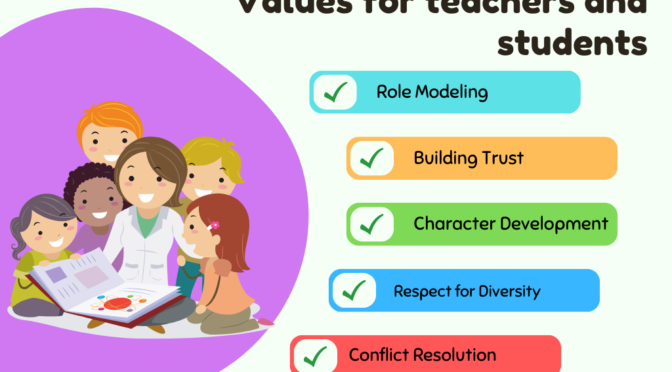
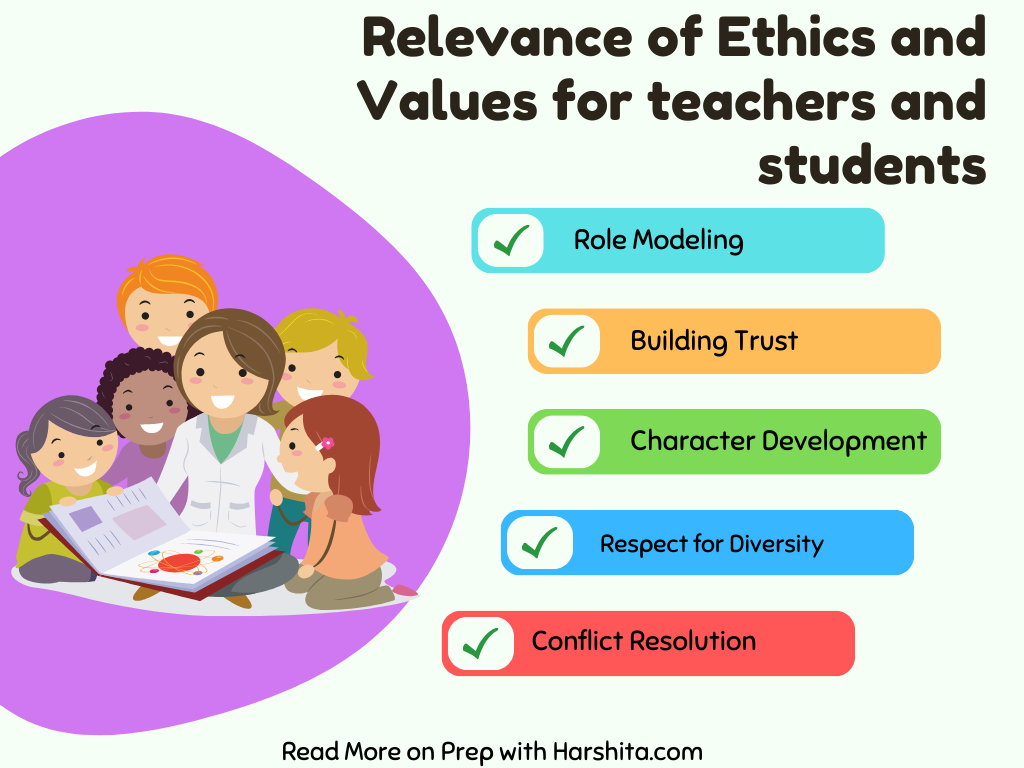
Relevance of Ethics and Values for teachers and students

Ethics and values play a crucial role in the education system, shaping the behavior, character, and overall development of both teachers and students. Here are some key aspects of the relevance of ethics and values in education:

For Teachers:

  1. Role Modeling:
    • Teachers serve as role models for their students. Demonstrating ethical behavior and values sets an example for students to emulate.
  2. Building Trust:
    • Ethical behavior fosters trust between teachers and students. When students perceive their teachers as fair, honest, and trustworthy, it creates a positive learning environment.
  3. Effective Teaching and Learning:
    • Teachers with strong ethical principles are likely to be more effective in the classroom. They can create an atmosphere conducive to learning and encourage students to engage in critical thinking and moral reasoning.
  4. Respect and Inclusivity:
    • Teachers should uphold values such as respect, inclusivity, and diversity. Creating a classroom that values differences and promotes understanding contributes to a positive educational experience.
  5. Professionalism:
    • Ethical conduct is a hallmark of professionalism. Teachers are responsible for maintaining professional boundaries, respecting confidentiality, and acting in the best interests of their students.
  6. Curriculum Development:
    • Teachers influence curriculum choices. Infusing ethical and moral content into the curriculum helps students develop a sense of responsibility and social awareness.

For Students:

  1. Character Development:
    • Education is not just about academic knowledge; it’s also about character development. Values education helps students develop qualities such as honesty, integrity, and responsibility.
  2. Social Responsibility:
    • Understanding ethical principles promotes social responsibility. Students who are aware of the impact of their actions on others are more likely to become responsible citizens.
  3. Critical Thinking:
    • Ethics encourages critical thinking and moral reasoning. Students learn to analyze situations from an ethical perspective, which enhances their decision-making skills.
  4. Conflict Resolution:
    • Values education equips students with the skills to handle conflicts and disagreements in a constructive and respectful manner. This is a valuable life skill.
  5. Respect for Diversity:
    • Learning about different ethical perspectives fosters tolerance and respect for diversity. This is essential in today’s globalized world.
  6. Preparation for Life:
    • Education is not only about preparing students for exams but also for life. Understanding ethics and values helps students navigate the complexities of the real world with a strong moral compass.

Also Read: School Budget

Relevance of Ethics and Values for Teachers and Students

Also Visit : Prep with Harshita

Make your learning journey easy and much interesting