Formation of Plan of Action: Long-Term and Short-Term

Formulating a comprehensive Plan of Action involves addressing both short-term and long-term objectives in policy development.

Here’s a guide on how to structure such a plan:

Short-term Plan of Action :

Assessment and Analysis:

  • Identify Immediate Needs: Conduct a rapid assessment to identify current issues or challenges that require urgent attention.
  • Stakeholder Analysis: Identify key stakeholders and their interests in the short term.

Policy Prioritization:

  • Identify Quick Wins: Determine policy measures that can deliver immediate, visible results.
  • Focus on High-Impact Areas: Prioritize policies that address critical issues with the potential for quick positive outcomes.

Resource Allocation:

  • Allocate Short-Term Resources: Allocate resources to initiatives with immediate impact.
  • Identify Funding Sources: Secure short-term funding to support urgent policy actions.

Communication and Outreach:

  • Develop a Communication Strategy: Clearly communicate short-term policy goals and actions to the public and stakeholders.
  • Engage Stakeholders: Foster collaboration and partnerships to implement short-term policies effectively.

Long-term Plan of Action

Vision and Goals:

  • Define Long-Term Vision: Clearly define the desired future state and goals for the policy area.
  • Establish Metrics: Develop measurable indicators to track progress towards long-term goals.

Policy Development and Research:

  • Conduct Comprehensive Research: Gather data and conduct in-depth analysis to inform evidence-based long-term policy development.
  • Engage Experts: Consult with subject matter experts and stakeholders to enhance the depth and quality of policy proposals.

Capacity Building:

  • Develop Institutional Capacity: Strengthen organizational and institutional capacities to effectively implement and manage long-term policies.
  • Invest in Human Resources: Train and build the expertise of personnel to handle the complexities of long-term policy implementation.

Public Engagement:

  • Public Consultations: Facilitate public input and participation in the policy development process.
  • Public Awareness Campaigns: Implement campaigns to inform the public about the long-term vision and benefits of the proposed policies.

Monitoring and Evaluation:

  • Establish Monitoring Systems: Develop systems for tracking and monitoring the implementation of long-term policies.
  • Evaluation Framework: Implement periodic evaluations to assess the impact and effectiveness of long-term policies.

International Collaboration:

  • Engage in Partnerships: Foster collaborations with international entities and neighboring countries to address global or regional challenges.
  • Share Best Practices: Learn from and share best practices with other nations facing similar long-term policy issues.

Also Read: Forecasting Manpower Need
Formation of Plan of Action

Also Visit: Prep with Harshita

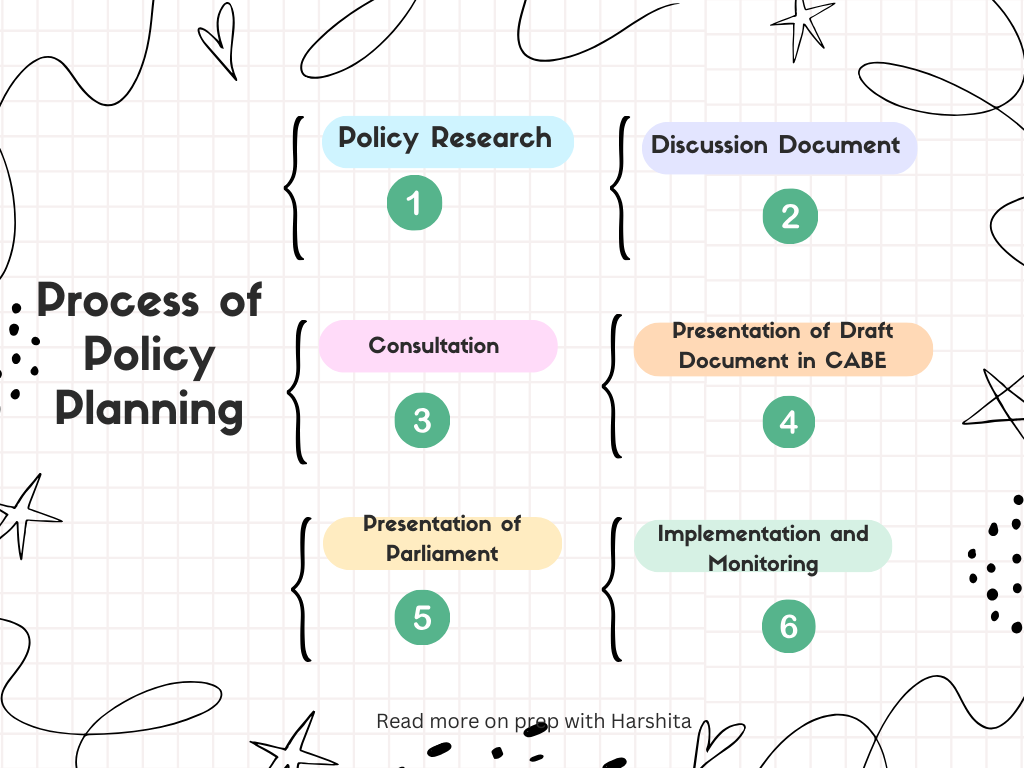
Process of Policy Formation

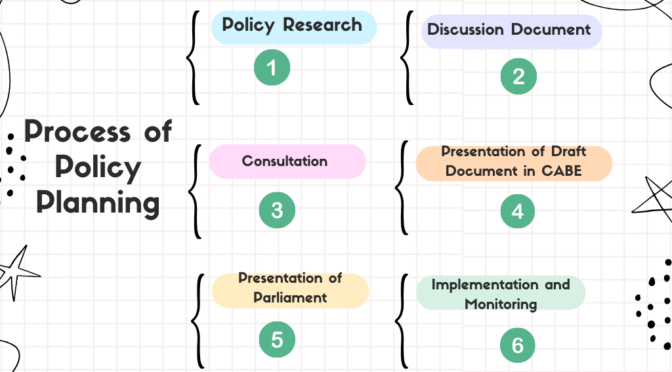
The process of policy formulation involves several stages, including policy research, the creation of discussion documents, consultations, the constitution of working groups, and the presentation of draft documents in relevant bodies like the Central Advisory Board of Education (CABE) and Parliament.

Let’s Discuss the Process of Policy Formation in Detail :

Policy Research

  • Identification of Issues: The process begins with identifying the issues that need to be addressed through policy. This may involve research, analysis of existing data, and the identification of gaps or challenges in the current system.
  • Data Collection and Analysis: The data is collected and analyzed to understand the scope and impact of the issues. This may involve quantitative and qualitative research methods.
  • Review of Best Practices: Policymakers often review best practices from other regions or countries to gain insights into effective approaches to similar issues.

Discussion Document :

  • Drafting a Discussion Document: Based on the research findings, a discussion document is drafted. This document outlines the issues, presents the research findings, and proposes potential policy options. It serves as a starting point for further discussions.
  • Internal Review: The discussion document is typically reviewed internally within the policymaking body or government department to ensure clarity and alignment with broader government goals.

Consultations:

  • Stakeholder Consultations: Policymakers engage in consultations with relevant stakeholders, including experts, community members, non-governmental organizations, and affected parties. This helps in gathering diverse perspectives and input.
  • Public Consultations: Depending on the nature of the policy, there may be public consultations to ensure that the policy reflects the needs and concerns of the broader population.

Constitution of Working Groups:

  • Formation of Working Groups: Based on the feedback received during consultations, working groups may be formed to go deeper into specific aspects of the policy. These groups typically consist of experts and representatives from relevant sectors.
  • In-Depth Analysis: Working groups analyze the policy in detail, considering different scenarios, potential challenges, and alternative solutions. They may also conduct additional research to inform their recommendations.

Presentation of Draft Document in CABE:

  • Central Advisory Board of Education (CABE): In the context of education policy, CABE is a crucial body for discussions and approvals. The draft policy document is presented to CABE for review and feedback.
  • Feedback and Revision: CABE members provide feedback, and the draft may undergo revisions based on the discussions. This iterative process ensures that the policy aligns with the broader education goals and receives input from key stakeholders.

Presentation of Parliament

  • Cabinet Approval: After CABE review and revisions, the draft policy is presented to the Cabinet for approval. The Cabinet, comprising senior government ministers, considers the policy’s implications, feasibility, and alignment with overall government priorities.
  • Parliamentary Debate and Approval: Once approved by the Cabinet, the policy is presented to the Parliament for debate and approval. Members of Parliament discuss the policy, ask questions, and vote on its adoption.

Implementation and Monitoring:

  • Implementation Plan: After parliamentary approval, an implementation plan is developed. This plan outlines the steps, timelines, and responsibilities for putting the policy into practice.
  • Monitoring and Evaluation: Ongoing monitoring and evaluation are established to assess the policy’s effectiveness. This may involve regular reviews, data collection, and adjustments based on feedback and changing circumstances.

Also Read: Need of Educational Planning

Process of Educational Policy Planning

Also Visit: Prep with Harshita

Disadvantages of group Guidance

While group guidance can be an effective way to provide support and information to individuals, it also comes with certain disadvantages.

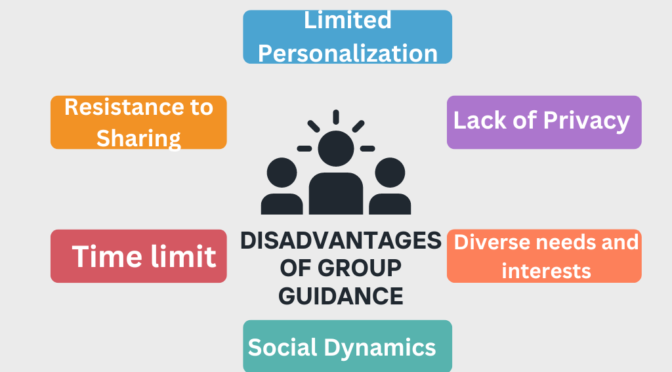
Here are some disadvantages of group guidance:

  1. Limited Personalization– Group guidance sessions may not address the specific needs or concerns of each individual in the group. The advice given may be generalized and may not be according to individual circumstances.
  2. Lack of Privacy– Group settings may not provide a confidential and private environment. Some individuals may be hesitant to share personal information or concerns in a group setting due to the fear of judgment or lack of privacy.
  3. Diverse needs and interests-Group members may have diverse needs, interests, and concerns. It can be challenging for a group facilitator to address the unique requirements of each participant, leading to some individuals feeling overlooked or not fully understood.
  4. Social dynamics– Group dynamics can impact the process of group guidance. Some individuals may be more dominant or outspoken, while others may be more reserved. This can create an uneven distribution of attention and support within the group.
  5. Time limit-In a group setting, there may be time constraints that limit the depth of discussion or discussion of individual concerns. Some participants may feel rushed or unable to fully express themselves within the allotted time.
  6. Resistance to sharing– Some individuals may be reluctant to share personal issues or concerns in a group, particularly if they are uncomfortable with public disclosure or if the issues are highly sensitive. This can limit the effectiveness of the guidance provided
  7. Homogeneity of information -In a group setting information may be presented in a standardized way to cater to the general audience. This may result in a lack of depth or specificity in addressing individual needs.

Also Read: Functions of a Counselor

Disadvantages of Group Guidance

Also Visit: Prep with Harshita

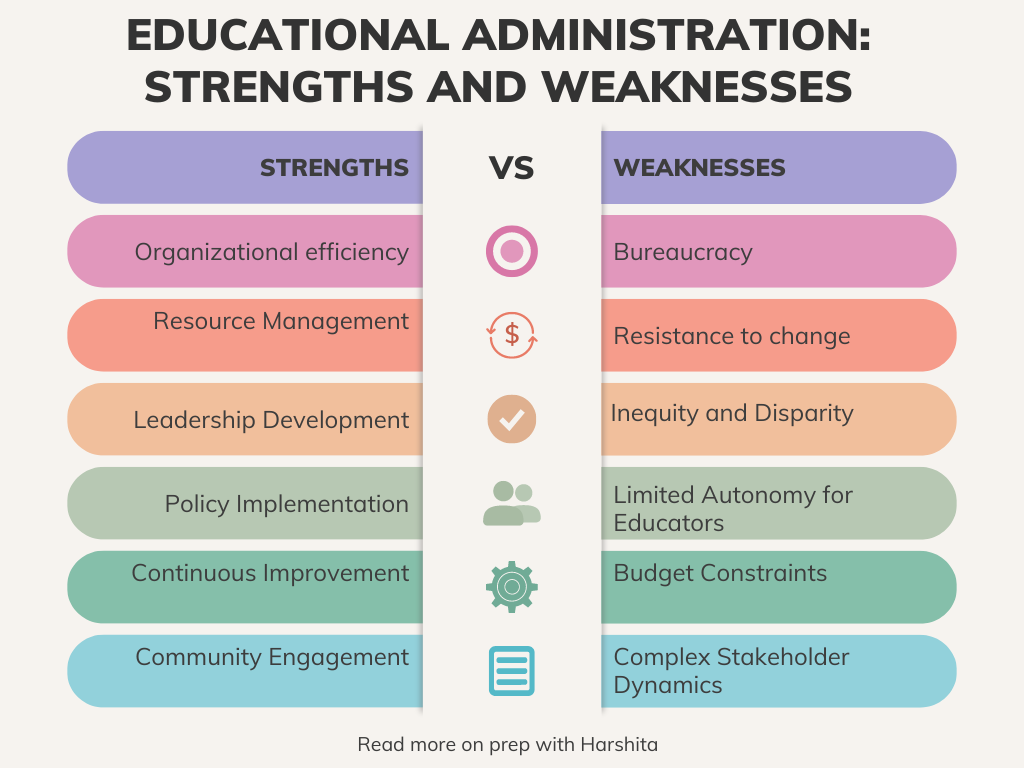
Educational Administration: Strengths and Weaknesses

Educational administration refers to the process of managing and leading educational institutions, such as schools, colleges, and universities. Like any field, educational administration has its strengths and weaknesses.

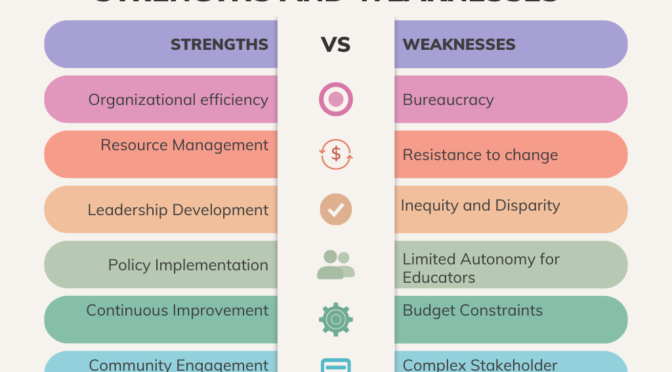
Strengths of Educational Administrations:

  1. Organizational Efficiency: Effective educational administration ensures that institutions work efficiently, with well-defined structures and processes. This helps in the smooth functioning of the institution.
  2. Resource Management: Administrators play a crucial role in managing resources such as human capital, finances, and facilities. Proper resource allocation enhances the overall quality of education.
  3. Leadership Development: Educational administration provides opportunities for leadership development among educators and administrators. Strong leadership is essential for the success of any educational institution.
  4. Policy Implementation: Educational administrators are responsible for implementing educational policies and reforms. They bridge the gap between policymakers and educators, translating policies into practical actions.
  5. Continuous Improvement: Administrators focus on assessing and improving the quality of education. This involves implementing strategies to enhance teaching methods, curriculum development, and student learning outcomes.
  6. Community Engagement: Administrators foster positive relationships with parents, communities, and stakeholders. This engagement is crucial for creating a supportive educational environment and garnering community support.

Weaknesses of Educational Administration:

  1. Bureaucracy: Educational institutions can become bureaucratic, with excessive paperwork, rigid rules, and slow decision-making processes. This can hinder innovation and adaptability.
  2. Resistance to Change: Educational systems can be resistant to change, making it challenging to implement new and innovative teaching methods, technologies, or educational policies.
  3. Inequity and Disparities: Administrative decisions may inadvertently contribute to inequities and disparities in education, such as unequal distribution of resources or opportunities among students.
  4. Limited Autonomy for Educators: Excessive control and micromanagement can limit the autonomy of teachers and educators, impacting their creativity and ability to tailor their teaching methods to the needs of their students.
  5. Budget Constraints: Educational institutions often face budget constraints, which can limit their ability to provide necessary resources, infrastructure, and professional development opportunities for educators.
  6. Complex Stakeholder Dynamics: Educational administrators must navigate complex relationships with various stakeholders, including teachers, parents, students, and policymakers. Balancing the diverse needs and expectations of these groups can be challenging.
  7. Overemphasis on Standardized Testing: In some educational systems, there is an overemphasis on standardized testing, which may lead to a narrow focus on test preparation at the expense of a broader, more holistic education.

Also Visit: Prep with Harshita

Educational Administration

Also Read: Teacher role as Curriculum Practitioner

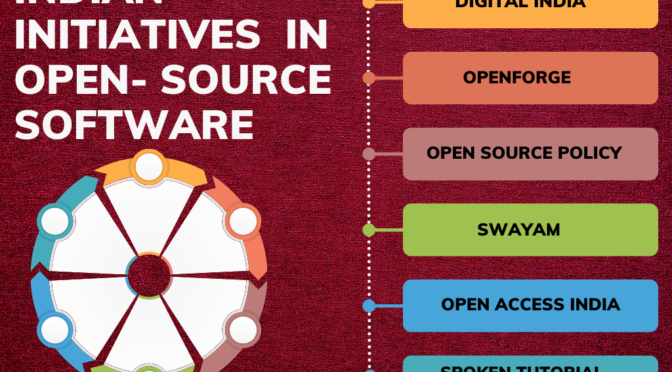
Indian Initiatives in Open-Source Software and Sharing of Digital Content

India has made significant contributions to open-source software and the sharing of digital content. Here are some notable Indian initiatives in open-source software and sharing of digital content:

Digital India

Launched by the Government of India, Digital India aims to transform the country into a digitally empowered society.

Digital India encourages the use of open-source software to ensure accessibility, affordability, and security in the digital space.

OpenForge:

An initiative by the National Informatics Centre (NIC), OpenForge is a collaborative platform for hosting and sharing of e-governance applications and open-source projects.

It facilitates the development of e-governance applications using open-source technologies, fostering transparency and innovation.

Open Source Policy:

The Indian government has actively embraced open-source policies, emphasizing the use of open-source software in various departments.

By adopting open-source solutions, the government aims to reduce costs and promote the development of locally customizable software.

SWAYAM (Study Webs of Active Learning for Young Aspiring Minds):

SWAYAM is an initiative by the Ministry of Education that provides online courses for students.

Content on SWAYAM is often released under open licenses, allowing for the sharing and reuse of educational resources.

Open Access India:

Open Access India is an advocacy group promoting open access, open data, and open education.

The group collaborates with various stakeholders, including researchers, institutions, and policymakers, to promote openness in research and education.

Spoken Tutorial Project:

Launched by the Indian Institute of Technology (IIT) Bombay, the Spoken Tutorial Project focuses on teaching and learning open-source software.

It aims to empower individuals, especially students, with skills in open-source technologies through easy-to-follow video tutorials.

Collaborations with Global Open Source Communities:

Indian developers and organizations actively contribute to global open-source projects.

Collaboration with international open-source communities fosters knowledge exchange and the development of cutting-edge technologies.

Also Read: Refresher Courses for Teacher

India’s initiatives in open-source software and digital content sharing not only promote technological innovation but also contribute to the democratization of information and the empowerment of individuals across the country.

Indian Initiative in Open Source Software

Also Visit: Prep with Harshita

Make your learning journey easy and much interesting