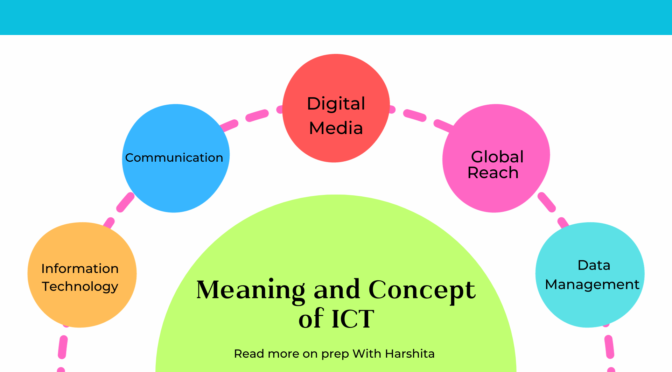
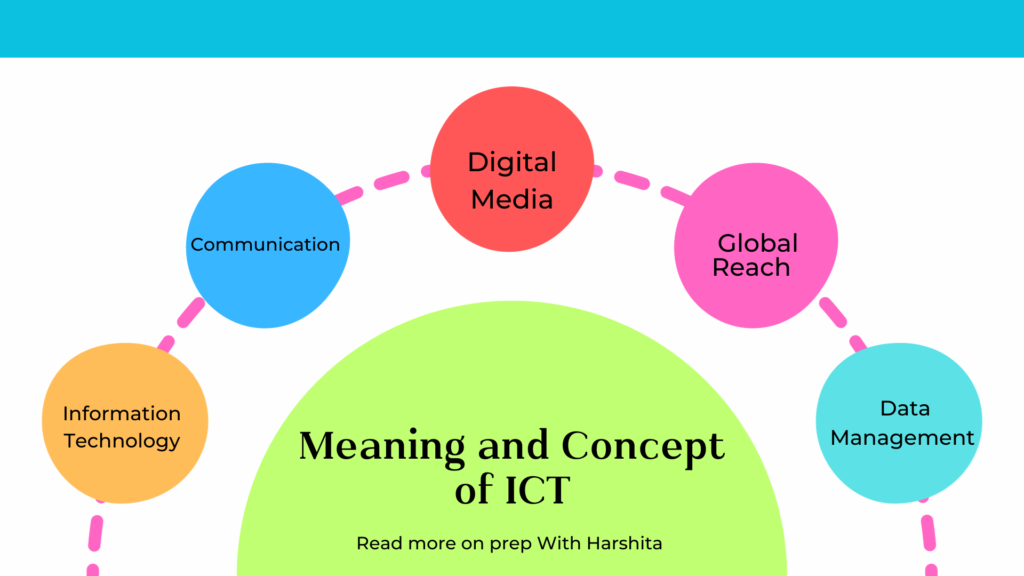
ICT stands for Information and Communication Technology. It is a broad term that encompasses the use of various technology tools and systems for gathering, storing, processing, transmitting, and presenting information. ICT is a fundamental part of modern life and has a significant impact on various aspects of society, business, education, and more.
Meaning of ICT: ICT refers to the integration of information and communication technologies to manage and process information. It involves the use of hardware, software, telecommunications, and various digital technologies to handle and exchange data, enabling individuals and organizations to access, share, and utilize information more efficiently.
Concept of ICT:
ICT is a multidisciplinary concept that brings together the following key components:
Information Technology (IT): This includes computer hardware and software, as well as networks and data storage systems used to process and manage information.
Telecommunications: This involves the transmission of data, voice, and video through various communication channels, such as the Internet, telephone networks, and wireless communication.
Digital Media: This covers the creation, manipulation, and sharing of digital content, including text, images, audio, and video.
ICT integrates these elements to enable the seamless exchange and processing of information across various platforms and devices.
Characteristics of ICT:
a. Accessibility: ICT has made information more accessible to people around the world. Through the internet and mobile devices, individuals can access vast amounts of data and resources.
b. Connectivity: ICT facilitates communication and collaboration across geographical boundaries. It allows people to connect and share information in real-time, regardless of their physical location.
c. Speed and Efficiency: ICT tools and systems enable the rapid processing and dissemination of information, improving productivity and decision-making.
d. Interactivity: ICT promotes interactivity and user engagement through various digital platforms, such as social media, websites, and applications.
e. Automation: Automation and computer-based systems are integral to ICT, making routine tasks more efficient and reducing the need for manual labor.
f. Multimedia Capabilities: ICT supports the creation, manipulation, and sharing of multimedia content, including text, images, audio, and video.
g. Data Management: ICT involves the collection, storage, and analysis of data to derive insights and make informed decisions.
h. Customization: ICT systems can be tailored to individual and organizational needs, allowing users to adapt technology to their specific requirements.
i. Global Reach: ICT breaks down geographical barriers and enables organizations to reach a global audience. This has significant implications for business, education, and communication.
The role of a head in a school as a transformative leader is pivotal in shaping the educational environment, fostering positive change, and ensuring the long-term success of the institution. Transformative leaders in education go beyond day-to-day management and strive to create a vision, build a culture of innovation, and drive continuous improvement.
Let’s see some of the roles :
Visionary Leadership:
Develop and communicate a clear, compelling vision for the school’s future. This vision should inspire and motivate all stakeholders—teachers, students, parents, and the community.
Strategic Planning:
Formulate a strategic plan that outlines specific goals and action steps to achieve the vision. This plan should align with the school’s mission and values.
Cultural Transformation:
Foster a school culture that promotes innovation, creativity, and a commitment to excellence. Create an inclusive, positive, and collaborative learning environment where all members feel valued.
Instructional Leadership:
Support teachers in improving their instructional practices. Provide professional development opportunities and guidance to help educators continuously enhance their teaching methods.
Data-Driven Decision-Making:
Encourage the use of data and evidence to inform decision-making. Regularly assess student outcomes, analyze the data, and make adjustments as needed to improve teaching and learning.
Change Management:
Be adept at managing change and guiding the school community through transitions. Implement new educational initiatives and technologies while addressing resistance and concerns.
Teacher Empowerment:
Empower teachers to take ownership of their professional development and classroom practices. Encourage them to experiment with innovative teaching methods and share their successes.
Community Engagement:
Build positive relationships with parents, the local community, and educational stakeholders. Engage them in the school’s mission and vision, seeking their input and support.
Inclusivity and Equity:
Prioritize inclusivity and equity in all aspects of school operations. Ensure that every student has an equal opportunity to succeed and that diverse perspectives are valued.
Professional Development:
Invest in the professional development of staff, including leadership training, to create a strong team of educators who are committed to the school’s mission and goals.
Resource Management:
Efficiently allocate resources, including budgets, personnel, and physical assets, to support the school’s strategic plan and educational initiatives.
Monitoring and Evaluation:
Implement systems for monitoring progress and evaluating the effectiveness of programs and practices. Make data-driven decisions to improve outcomes.
Educational or school administration refers to the management and leadership of educational institutions, such as schools, colleges, and universities. Effective educational administration plays a crucial role in ensuring the smooth functioning of an educational institution and the delivery of quality education.
Here are some fundamental principles of educational administration:
Clear Educational Vision and Mission: Educational administrators should establish a clear and compelling vision and mission for the institution. This vision should guide all decision-making and activities within the school, ensuring that everyone is working toward common goals.
Effective Leadership: Strong leadership is vital in educational administration. Leaders should inspire and motivate staff, students, and other stakeholders. They must also provide direction, set expectations, and make informed decisions.
Ethical and Moral Standards: Administrators must maintain high ethical and moral standards. They should model ethical behavior and ensure the institution upholds integrity, honesty, and fairness in all its operations.
Effective Communication: Communication is essential for the smooth operation of any educational institution. Administrators should establish clear lines of communication among staff, students, parents, and the community. Regular and transparent communication fosters trust and collaboration.
Resource Management: Efficient use of resources, including financial, human, and physical resources, is critical. Administrators should allocate resources wisely, ensuring that they are used to benefit the educational program and the well-being of students.
Data-Driven Decision-Making: Educational administrators should make decisions based on data and evidence. They should use assessment results and other relevant information to inform instructional practices and institutional policies.
Curriculum Development and Innovation: Administrators play a role in curriculum development and should encourage innovation in teaching and learning. They should support the development of a curriculum that is relevant, up-to-date, and aligned with educational goals.
Professional Development: Administrators should promote continuous professional development for educators and staff. This includes offering opportunities for training, growth, and skill enhancement.
Student-Centered Approach: Educational administrators should prioritize the well-being, safety, and academic success of students. They should create an environment that is conducive to learning and personal development.
Inclusivity and Equity: Promoting inclusivity and equity is a fundamental principle. Administrators should work to ensure that all students, regardless of their background or abilities, have equal access to quality education.
Stakeholder Engagement: Engaging with parents, the community, and other stakeholders is essential. Administrators should involve these groups in the decision-making process and create a sense of community and shared responsibility.
Legal Compliance: Educational administrators must ensure that the institution complies with all relevant laws and regulations. This includes matters related to student safety, special education, and employment practices.
Assessment and Accountability: Administrators should establish systems for assessing the performance of both students and staff. Accountability measures should be in place to monitor progress and ensure that goals are met.
Continuous Improvement: Educational institutions should be committed to ongoing improvement. Administrators should regularly evaluate programs and practices and make adjustments as necessary to enhance the quality of education.
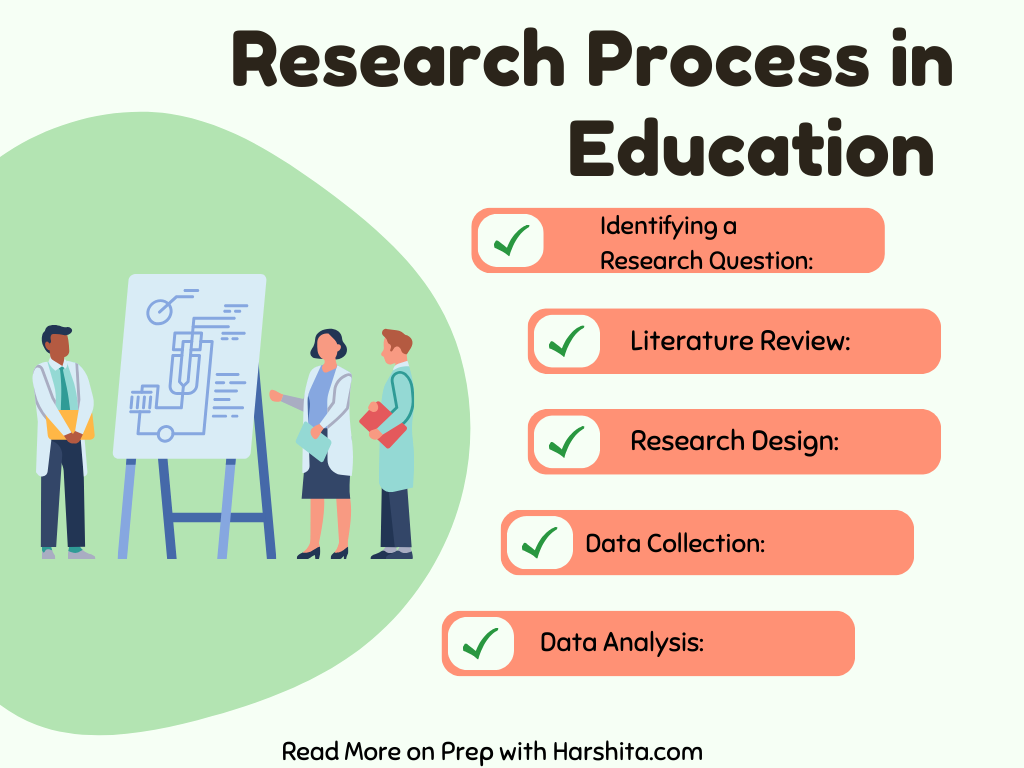
Identifying a Research Question: The research process typically begins with the identification of a specific research question or problem that the researcher wants to investigate. This question should be relevant, clear, and researchable.
Literature Review: Researchers review existing literature to gain a deep understanding of the topic, identify gaps in knowledge, and establish the theoretical framework for their study.
Research Design: Researchers choose the research design, which can be qualitative, quantitative, or mixed methods, depending on the research question and goals.
Data Collection: Data is gathered through methods such as surveys, interviews, observations, experiments, or document analysis. Researchers must ensure data collection is ethical and rigorous.
Data Analysis: Data is analyzed using appropriate statistical or qualitative analysis techniques. The results are used to answer the research question and test hypotheses.
Interpretation and Discussion: Researchers interpret the findings in the context of the existing literature and discuss their implications for theory, practice, or policy.
Conclusion and Recommendations: Researchers conclude the study by summarizing the main findings and offering recommendations for future research or educational practice.
Publication and Dissemination: The research is often disseminated through academic journals, conferences, or policy reports, contributing to the body of knowledge in the field of education.
Throughout the research process, ethical considerations, such as obtaining informed consent and protecting participant confidentiality, are paramount in educational research. Researchers should also consider the practical applications of their findings to improve educational practices and outcomes.
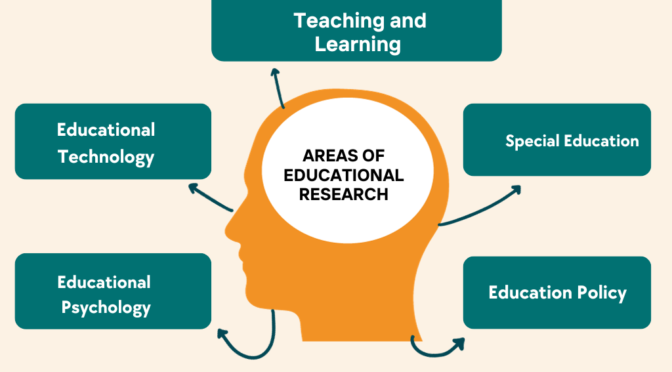
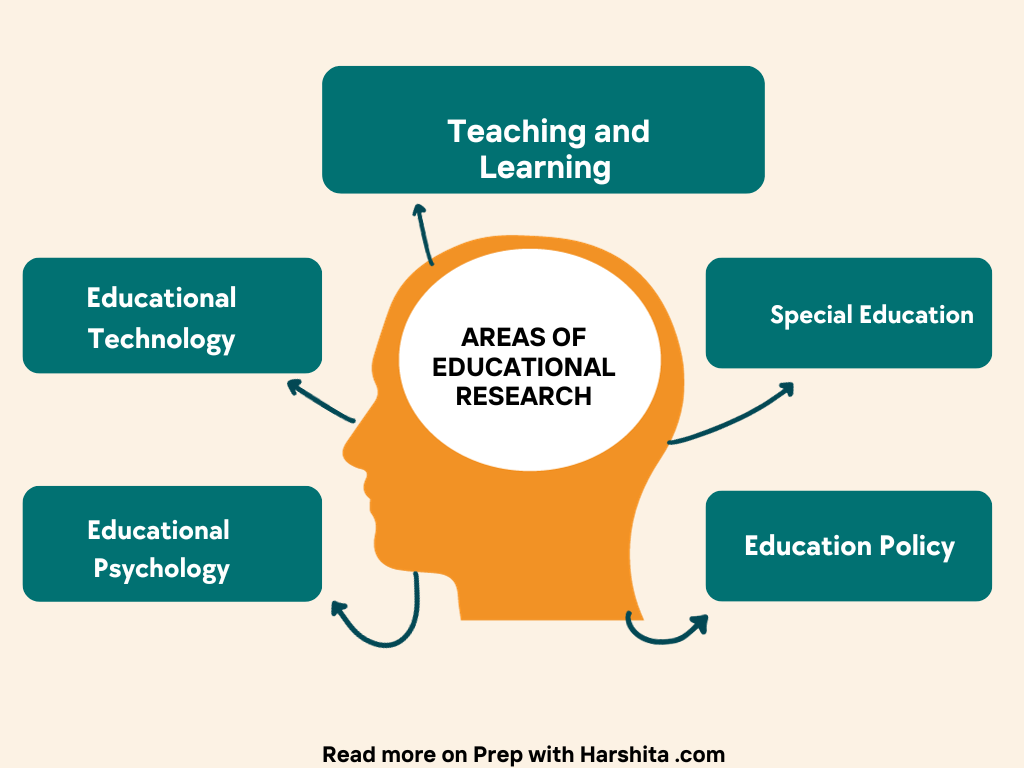
Educational research is a diverse field that encompasses a wide range of topics and areas of study. Researchers in the field of education investigate various aspects of teaching, learning, and educational systems to improve education outcomes and inform policy and practice.
Here are some common areas of educational research and an overview of the research process:
Areas of Educational Research:
Teaching and Learning: Research in this area focuses on instructional methods, curriculum development, and factors that influence student learning, such as teacher-student relationships and classroom dynamics.
Educational Technology: This area explores the integration of technology into education, the effectiveness of e-learning platforms, and the impact of digital tools on teaching and learning.
Educational Psychology: Researchers in this field study cognitive and social development, motivation, and factors affecting student behavior and performance.
Special Education: Special education research examines the needs of students with disabilities, strategies for inclusion, and the effectiveness of interventions and accommodations.
Assessment and Evaluation: This area focuses on the development of standardized tests, assessment methods, and the use of assessment data to improve instruction and student outcomes.
Educational Policy: Researchers study the impact of educational policies, school reform, and funding on educational outcomes and equity.
Teacher Education and Professional Development: This area explores the preparation of teachers, ongoing professional development, and the impact of teacher training on student achievement.
Higher Education: Research in higher education investigates college and university policies, student success, access to higher education, and faculty research and teaching.
Language and Literacy: Researchers examine language development, literacy acquisition, and strategies to improve reading and writing skills.
Sociocultural and Multicultural Education: This area explores issues related to diversity, equity, and inclusion in education, including cultural competence and the experiences of marginalized groups.