Schools play a crucial role in society by serving several functions and maintaining various relationships with the broader community. These functions and relationships are integral to the development of individuals and the well-being of society as a whole. Let’s look at the various aspects :
1. Education and Skill Development:
Primary Function: The primary function of schools is to provide education and facilitate the acquisition of knowledge and skills by students.
Societal Impact: Education equips individuals with the knowledge and skills needed to become productive members of society. A well-educated populace can contribute to economic growth, innovation, and social progress.
2. Socialization and Character Development:
Primary Function: Schools also serve as social institutions where students learn societal norms, values, and ethical behavior.
Societal Impact: Schools help shape the character and social skills of students, preparing them to interact positively in society and uphold shared values.
3. Cultural Transmission:
Primary Function: Schools transmit cultural heritage, language, and traditions to younger generations.
Societal Impact: This helps preserve and pass down cultural identity, fostering a sense of continuity and belonging within a society.
4. Community Hub:
Primary Function: Schools often function as community centers, providing a space for meetings, events, and activities outside of regular school hours.
Societal Impact: Schools contribute to the social fabric of a community, promoting a sense of togetherness and a platform for community engagement.
5. Social Mobility:
Primary Function: Schools can act as equalizers by offering opportunities for social mobility and advancement through education.
Societal Impact: Education can reduce social inequalities and provide individuals with the chance to improve their socio-economic status, which in turn benefits the broader society.
6. Research and Innovation:
Primary Function: Many educational institutions, particularly universities, engage in research and innovation, contributing to advancements in various fields.
Societal Impact: Research conducted at educational institutions can lead to technological advancements, scientific discoveries, and solutions to societal challenges.
7. Civic Engagement and Citizenship:
Primary Function: Schools educate students about their rights and responsibilities as citizens and encourage civic engagement.
Societal Impact: Informed and engaged citizens are essential for a functioning democracy, as they participate in the decision-making process and contribute to the well-being of their communities and nations.
8. Economic Impact:
Primary Function: Schools produce a skilled workforce that contributes to economic development.
Societal Impact: An educated workforce enhances a nation’s competitiveness, productivity, and economic growth.
9. Social Cohesion:
Primary Function: Schools can promote social cohesion by bringing together students from diverse backgrounds and fostering tolerance and understanding.
Societal Impact: This contributes to a more harmonious and integrated society by reducing prejudice and promoting inclusivity.
Health education is a process that aims to promote and improve the health and well-being of individuals, communities, and societies through the dissemination of knowledge, the development of essential skills, and the promotion of healthy behaviors and lifestyles.
It is an integral part of public health and healthcare systems and plays a crucial role in preventing diseases, promoting healthy behaviors, and empowering individuals to make informed decisions about their health.
Key concepts and principles of health education include:
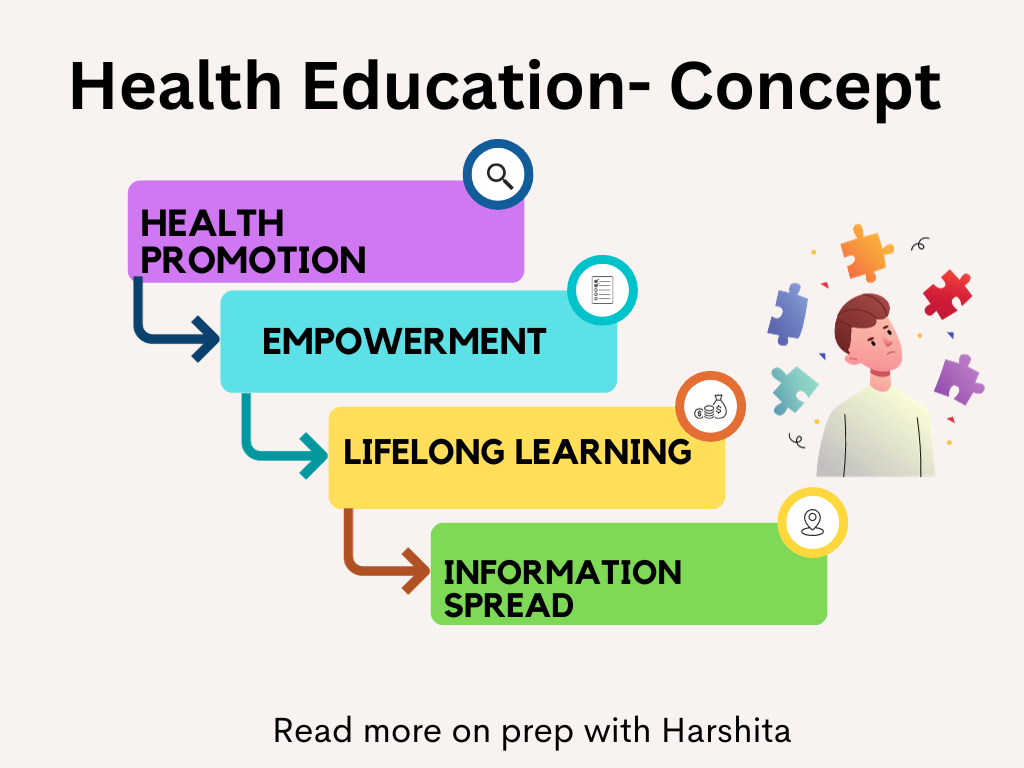
Information Dissemination: Health education involves providing accurate and up-to-date information about various aspects of health, including nutrition, physical activity, disease prevention, mental health, sexual health, substance abuse, and more. This information empowers individuals to make informed choices about their health.
Behavior Change: It seeks to influence and change unhealthy behaviors by promoting positive ones. This may involve teaching individuals how to quit smoking, adopt healthier eating habits, practice safe sex, or manage stress effectively.
Health Promotion: It aims to promote health and prevent disease rather than just focusing on the treatment of illness. Health education encourages people to adopt a proactive approach to their health, emphasizing preventive measures such as vaccinations, screenings, and regular check-ups.
Empowerment: It empowers individuals to take control of their own health and make informed decisions. It teaches them how to access reliable health information, assess risks, and develop self-care skills.
Tailoring to Target Audience: Effective health education programs consider the specific needs, backgrounds, and cultural sensitivities of the target audience. Messages and interventions should be tailored to address the unique challenges and circumstances of different communities or populations.
Communication Strategies: Effective communication is central to health education. It involves clear and concise messaging, using various communication channels such as media, social media, public speaking, and interpersonal communication.
Community and School-Based Education: Health education can take place in schools, workplaces, healthcare settings, and communities. It may be part of formal curricula, workshops, awareness campaigns, or one-on-one counseling.
Policy Advocacy: It can also involve advocating for policies that support healthy behaviors and environments, such as tobacco control laws, nutrition labeling, and public health regulations.
Lifelong Learning: It is not limited to a specific age group or life stage. It should be a lifelong process, encouraging individuals to continuously seek knowledge and adapt their behaviors as they age and their health needs change.
Online teaching and learning have become increasingly prominent in the education sector, especially with the advent of digital technology and the Internet. However, they come with their own scope and challenges:
Scope of Online Teaching and Learning:
Global Reach: Online teaching enables educators to reach a global audience, breaking down geographical barriers. Students from around the world can access quality education without having to relocate.
Flexible Learning: Online education offers flexibility in terms of when and where students can learn. It caters to a wide range of learners, including those who are working or have other commitments.
Diverse Learning Resources: With the internet at their disposal, students can access a vast array of learning resources, including videos, interactive simulations, e-books, and more.
Personalized Learning: Many online platforms and tools allow for personalized learning experiences. Students can progress at their own pace and receive customized feedback and resources.
Cost-Efficiency: Online education can often be more cost-effective than traditional classroom-based education. It eliminates the need for physical infrastructure and reduces other operational costs.
Accessibility: Online education can be more accessible for students with disabilities, as it allows for the integration of assistive technologies.
Challenges of Online Teaching and Learning:
Technical Challenges: Many students and educators may not have access to reliable internet connections and suitable devices, which can hinder the online learning experience.
Engagement and Motivation: It can be challenging to keep students engaged and motivated in an online environment, as there are more distractions and less face-to-face interaction.
Lack of Social Interaction: Online learning can be isolating, as it often lacks the social aspects of traditional classroom learning. This can impact students’ social and emotional development.
Assessment and Cheating: Assessing students’ learning and preventing cheating can be more challenging in an online setting. Proctoring and plagiarism detection tools are often used to address this issue.
Teacher Training: Educators need to be trained in online teaching methods and tools. Many traditional educators may lack the necessary skills and experience.
Quality Assurance: Ensuring the quality of online courses and programs can be a challenge. It’s essential to have mechanisms in place to evaluate and improve the quality of online education.
Data Privacy and Security: Protecting students’ personal information and ensuring the security of online learning platforms is crucial. Data breaches and privacy concerns can be significant issues.
Inequity and Accessibility: Online education may exacerbate existing inequalities, as not all students have equal access to technology and a conducive learning environment.
Regulatory and Accreditation Challenges: Some online education providers face challenges in obtaining accreditation and recognition, which can impact the value of the credentials they offer.
Content Quality: The quality of online educational content can vary widely. Ensuring that the content is accurate, up-to-date, and effective is a continuous challenge.
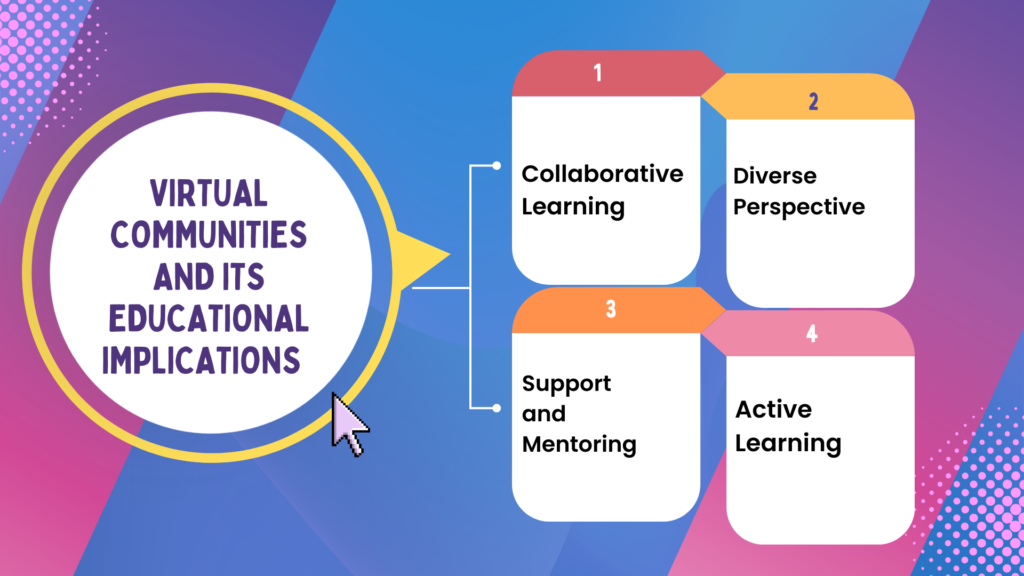
Virtual communities refer to online groups or networks of individuals who share common interests, activities, or goals and interact with one another through digital communication tools. These communities can have significant educational implications, particularly in the context of online and distance learning.
Accessible Learning Environments:
Virtual communities provide accessible learning environments, breaking down geographical barriers. Students from around the world can participate in educational discussions and activities, promoting a diverse and inclusive learning experience.
Collaborative Learning:
Virtual communities facilitate collaborative learning. Students can engage in group discussions, share resources, and work on projects together, promoting teamwork and peer-to-peer learning.
Diverse Perspectives:
Virtual communities often bring together individuals from different backgrounds, cultures, and experiences. This diversity enriches discussions and encourages students to consider various perspectives.
Flexibility and Convenience:
Online virtual communities offer flexibility and convenience, allowing students to participate at their own pace and on their own schedules. This is especially beneficial for adult learners or those with busy schedules.
Support and Mentoring:
Virtual communities can serve as platforms for students to seek support and mentoring from peers or instructors. They can ask questions, share challenges, and receive guidance within the community.
Social Learning:
Learning is a social activity, and virtual communities replicate this social aspect of education. Students can engage in social learning experiences, which can enhance their understanding of the content.
Active Learning:
Active participation in virtual communities is often encouraged. This active engagement helps reinforce learning and retention of knowledge.
Synchronous and Asynchronous Learning:
Virtual communities can support both synchronous (real-time) and asynchronous (delayed) learning, accommodating different learning styles and preferences.
Sharing of Resources:
Members of virtual communities can share educational resources, such as articles, videos, and research materials, leading to a richer learning experience.
Professional Development:
Virtual communities can be used for professional development and networking. Educators can join communities related to their field to stay updated on best practices, trends, and research.
Motivation and Engagement:
Active participation in a virtual community can enhance motivation and engagement. Students may be more inclined to learn when they feel a sense of belonging to a supportive group.
Feedback and Assessment:
Instructors can use virtual communities for formative assessment by monitoring students’ participation and contributions. They can provide feedback and adjust their teaching accordingly.
Digital Literacy:
Participation in virtual communities helps students develop digital literacy skills, which are essential in today’s digital age.
Building a Personal Learning Network (PLN):
Students can build their own personal learning networks within virtual communities. These networks can be invaluable for lifelong learning and professional growth.
Cultivating Online Citizenship:
Virtual communities provide an opportunity to teach digital citizenship, emphasizing ethical and responsible online behavior and interaction.
Building Communities of Practice:
In professional and vocational education, virtual communities can serve as communities of practice, where practitioners share expertise and collaborate to advance their field.
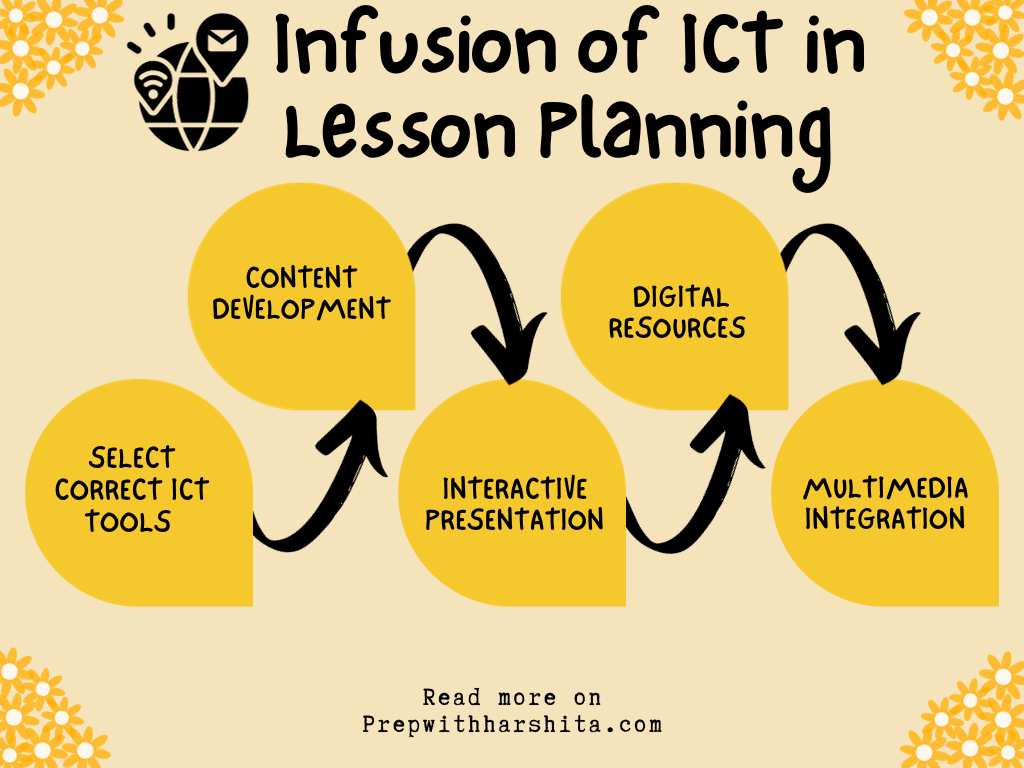
Infusing ICT (Information and Communication Technology) into lesson planning is a detailed and systematic process that involves integrating digital tools, resources, and strategies into your teaching to enhance the learning experience.
Here’s a step-by-step guide on how to effectively infuse ICT into your lesson planning:
Identify Learning Objectives:
Start with clear and specific learning objectives. What do you want your students to learn or achieve by the end of the lesson?
Select Appropriate ICT Tools:
Identify ICT tools and resources that align with your learning objectives. These can include:
Software and Applications: Choose educational software, apps, or online tools that support your lesson goals.
Multimedia: Utilize images, videos, animations, and interactive multimedia to engage students.
Websites and Online Resources: Incorporate relevant websites, e-books, articles, and databases for research and exploration.
Learning Management Systems (LMS): Use an LMS to manage content, assignments, and assessments.
Collaboration and Communication Tools: Employ platforms for discussions, group projects, and communication.
Content Development:
Create or curate digital content that aligns with your lesson objectives. This may include presentations, e-learning modules, or multimedia resources.
Interactive Presentations:
Use presentation software (e.g., PowerPoint, Google Slides, Prezi) to design engaging and visually appealing lesson materials. Incorporate multimedia elements to make the content interactive.
Digital Resources:
Provide links to online resources that supplement the lesson. Ensure that these resources are credible, relevant, and accessible to students.
Collaborative Learning:
Foster collaboration among students using online discussion boards, group projects, and collaborative tools such as Google Docs or Microsoft Teams.
Assessment Tools:
Incorporate digital assessment tools like online quizzes, surveys, and self-assessment activities for formative and summative assessments.
Adaptive Learning:
Consider adaptive learning platforms that personalize content and assignments based on individual student needs and progress.
Feedback Mechanisms:
Use ICT tools for efficient and timely feedback. Learning management systems often offer features for automated grading and feedback.
Monitoring and Analytics:
Utilize data analytics and LMS dashboards to monitor student progress. Analyze the data to identify areas where students may need additional support or content adjustments.
Multimedia Integration:
Integrate various multimedia elements like audio and video to cater to different learning styles and engage students visually and auditorily.
Virtual Labs and Simulations:
In science and technical subjects, consider virtual labs and simulations that allow students to conduct experiments and practice skills in a virtual environment.
Flipped Classroom Approach:
Consider using ICT to deliver content outside of class, allowing in-class time for discussions, problem-solving, and collaborative activities.
Accessibility and Inclusivity:
Ensure that all ICT tools and content are accessible to all students, including those with disabilities. Use technologies that offer features like closed captions, screen readers, and alternative formats.
Professional Development:
Teachers may need training and ongoing professional development to effectively use ICT in lesson planning. Many educational institutions offer workshops and resources for this purpose.
Continuous Improvement:
Continuously evaluate the effectiveness of ICT integration in lesson planning. Collect feedback from students and use data analytics to make improvements.