LAC (Language across the Curriculum) Approach

The Language Across the Curriculum (LAC) approach is an educational framework that emphasizes the integration of language development and content learning across various subject areas. It recognizes that language is not only a tool for communication but also a fundamental aspect of learning and understanding academic content.

In the LAC approach, language instruction is not confined to language-specific classes (such as English or foreign language classes), but is embedded within the teaching and learning of all subjects. The goal is to support students in acquiring both language skills and subject-specific knowledge simultaneously, promoting a deeper understanding of content and enhancing overall academic achievement.

Here are some key elements and principles of the LAC approach:

  1. Language as a Medium of Learning: In the LAC approach, language is viewed as a vehicle through which students access and express knowledge across different disciplines. It recognizes that language proficiency is crucial for students to comprehend and communicate ideas effectively in various subject areas.
  2. Integrated Language Instruction: LAC promotes the integration of language instruction within subject-specific lessons. Language skills (reading, writing, speaking, listening) are explicitly taught and practiced within the context of subject content. Teachers provide explicit language instruction, including vocabulary development, comprehension strategies, and language structures specific to each subject.
  3. Language Development Strategies: LAC emphasizes the use of language development strategies that support students in comprehending and producing academic language. These strategies may include scaffolding techniques, graphic organizers, explicit language modeling, and providing language-rich resources. The aim is to help students become more competent and confident language users in different academic contexts.
  4. Content-Specific Language Skills: LAC recognizes that each discipline has its unique language demands and conventions. Teachers focus on teaching subject-specific language skills, such as scientific or mathematical terminology, historical analysis, or persuasive writing techniques. This ensures that students not only understand the content but also develop the language skills necessary to engage with and communicate about that content effectively.
  5. Collaboration among Educators: LAC encourages collaboration and communication among educators from different subject areas. Teachers work together to plan and design curriculum units that integrate language and content knowledge. They share instructional strategies, resources, and assessments to create a coherent and cohesive learning experience for students across subjects.
  6. Assessment of Language and Content: LAC incorporates assessments that evaluate both language proficiency and subject knowledge. Assessments may include tasks that require students to demonstrate their understanding of content through various language skills, such as writing an argumentative essay, delivering a presentation, or engaging in a scientific discussion. This allows teachers to gauge students’ language development and content mastery simultaneously.
  7. Ongoing Professional Development: Implementing the LAC approach requires ongoing professional development for educators. It supports teachers in understanding the language demands of their subject areas, integrating language instruction effectively, and developing instructional materials that align with the principles of LAC.

Overall, the Language Across the Curriculum (LAC) approach seeks to enhance students’ language proficiency and subject knowledge by integrating language instruction within all subject areas. It acknowledges the importance of language as a tool for learning and promotes an integrated and interdisciplinary approach to education.

Also Read: Sources of Knowledge
Language across the curriculum Approach
Language Across the curriculum Approach

Also Visit: Prep with Harshita

Quality Assurance in Teacher Education

Quality assurance in teacher education encompasses a range of activities and processes aimed at ensuring that teacher education programs meet specific standards and criteria.

Here is a more detailed explanation of the components and practices involved in quality assurance in teacher education:

  1. Program Accreditation: Accreditation is a critical aspect of quality assurance in teacher education. Accrediting bodies evaluate and assess teacher education programs against predetermined standards and criteria. These standards typically cover areas such as curriculum design, faculty qualifications, resources, assessment and evaluation practices, field experiences, and program outcomes. Accreditation ensures that programs meet the required benchmarks for delivering high-quality teacher education.
  2. Program Evaluation: Regular program evaluation is an integral part of quality assurance. This involves conducting systematic assessments of teacher education programs to identify areas of strength and areas that require improvement. Evaluation may involve various methods such as self-assessment, external reviews, site visits, surveys, and analysis of student outcomes. Program evaluations help identify areas for enhancement and inform ongoing program development and improvement efforts.
  3. Curriculum Review and Development: Quality assurance in teacher education involves reviewing and developing curriculum frameworks to ensure they are relevant, up-to-date, and aligned with national or regional standards. This includes assessing the appropriateness of subject content, pedagogical approaches, assessment methods, and the integration of technology. Regular review and revision of the curriculum help address emerging educational needs and trends and equip future teachers with the necessary knowledge and skills.
  4. Faculty Qualifications and Professional Development: Ensuring the qualifications and professional development of faculty members is vital for quality assurance. Teacher education programs should employ highly qualified faculty members with expertise in relevant subject areas and pedagogy. Ongoing professional development opportunities for faculty support their growth, keep them updated with the latest research and best practices, and enhance their teaching effectiveness.
  5. Field Experiences and Practicum: Quality assurance involves providing robust and well-structured field experiences and practicum opportunities for pre-service teachers. These experiences allow students to apply their knowledge in real classroom settings, develop practical teaching skills, and receive feedback and guidance from experienced educators. Quality assurance processes ensure that field experiences are carefully planned, supervised, and aligned with program goals to facilitate meaningful learning experiences for future teachers.
  6. Assessment and Evaluation Practices: Quality assurance includes establishing sound assessment and evaluation practices in teacher education programs. This involves ensuring that assessments effectively measure students’ knowledge, skills, and competencies related to teaching. It also involves providing timely and constructive feedback to students to support their growth and development. Assessment practices should align with program objectives, be valid and reliable, and reflect best practices in educational assessment.
  7. Collaboration with Schools and Stakeholders: Quality assurance in teacher education includes fostering strong partnerships and collaborations with schools, school administrators, and other stakeholders. These collaborations help ensure that teacher education programs are responsive to the needs of schools and communities and reflect the realities of the teaching profession. Engaging stakeholders in program development, evaluation, and continuous improvement processes strengthens the quality and relevance of teacher education programs.
  8. Continuous Improvement: It is an ongoing process of continuous improvement. It involves regularly monitoring and reviewing program outcomes, soliciting feedback from students, graduates, employers, and other stakeholders, and implementing necessary changes and enhancements. This iterative process helps ensure that teacher education programs remain relevant, effective, and responsive to changing educational needs.

By implementing robust quality assurance practices, teacher education programs can uphold high standards of quality, enhance the preparation of future teachers, and contribute to the overall improvement of education systems.

Also Read: Concept of In-service Teacher Education

Quality Assurance in Teacher Education

Also Visit: Prep with Harshita

Needs of Innovation in Pre-Service Teacher Education Programme

Pre-service teacher education refers to the training and preparation programs that individuals undergo before they become certified or licensed teachers. It is the stage of education that occurs prior to a person entering the teaching profession and involves acquiring the necessary knowledge, skills, and competencies to be an effective educator. Pre-service teacher education programs are typically offered at colleges, universities, and teacher training institutions.There is a strong needs of Innovation in Pre-Service Teacher Education Programme.

Needs of Innovation in Pre-Service Teacher Education Programme

  1. Evolving Educational Landscape: The field of education is continuously evolving, with new research, technological advancements, and changing student needs. Pre-service teacher education programs need to keep pace with these developments and equip future teachers with the knowledge, skills, and strategies to meet the demands of modern classrooms. Innovation in teacher education ensures that graduates are prepared to navigate and adapt to the changing educational landscape effectively.
  2. Enhancing Teaching Effectiveness: Innovative pre-service teacher education programs can focus on developing effective teaching practices. By incorporating innovative pedagogies, instructional technologies, and research-based approaches, these programs can equip aspiring teachers with the tools and techniques to engage and motivate learners, facilitate critical thinking, and promote active and meaningful learning experiences. Such programs empower teachers to become more effective facilitators of knowledge and foster student success.
  3. Meeting Diverse Student Needs: Today’s classrooms are characterized by diverse student populations with varying abilities, cultural backgrounds, and learning styles. Innovative teacher education programs should address the importance of inclusive education and culturally responsive teaching. They should equip teachers with strategies to differentiate instruction, create inclusive classroom environments, and meet the unique needs of every learner. By embracing innovation, teacher education can better prepare teachers to support diverse students effectively.
  4. Integrating Technology: Technology plays a significant role in modern education, and teachers need to be proficient in leveraging technology for instruction and student engagement. Innovative pre-service teacher education programs should incorporate training on educational technologies, digital literacy, and the integration of technology in pedagogical practices. This empowers future teachers to use various digital tools and resources to enhance learning, facilitate collaboration, and differentiate instruction.
  5. Promoting Reflective and Inquiry-Based Practices: Innovative teacher education programs should emphasize the importance of reflective practice and inquiry-based teaching approaches. By fostering critical thinking, self-reflection, and ongoing professional development, these programs cultivate a culture of lifelong learning among pre-service teachers. They encourage teachers to continually reflect on their practice, seek innovative solutions to challenges, and engage in action research to improve their teaching effectiveness.
  6. Collaboration and Networking: Innovative teacher education programs can provide opportunities for collaboration and networking among pre-service teachers. By promoting collaborative learning, peer mentoring, and sharing of best practices, these programs foster a community of teachers who can support and learn from each other. This collaborative approach enhances professional growth and encourages the development of a supportive network that extends beyond the pre-service education period.
  7. Promoting Leadership and Advocacy Skills: Innovative teacher education programs should not only focus on classroom instruction but also prepare teachers to be leaders and advocates in the education field. These programs can provide training in leadership skills, educational policy, and advocacy to empower teachers to contribute to the improvement of education at the system level. This broader perspective equips teachers to advocate for equitable education, educational reform, and the needs of their students.

In summary, the need for innovation in pre-service teacher education programs arises from the ever-changing educational landscape, the diverse needs of students, the integration of technology, and the desire to enhance teaching effectiveness. By incorporating innovative practices, these programs can equip future teachers with the necessary skills, knowledge, and mindset to navigate and thrive in today’s dynamic classrooms and contribute positively to the field of education.

Also Read: Concept of Pre-Service Teacher Education

Needs of Innovation in Pre-Service Teacher Education Programme

Also Visit: Prep with Harshita
SCERT (State Council of Educational Research and Training)

The State Council of Educational Research and Training (SCERT) is a prominent educational institution established in various states of India. SCERT plays a vital role in the development of curriculum, textbooks, teacher training, research, and other educational initiatives.

Let’s explore SCERT in education in more detail:

  1. Mandate and Objectives: SCERT’s primary objective is to improve the quality of school education in the respective state. It aims to achieve this by undertaking the following activities:
  • Developing and revising state curriculum frameworks and syllabi.
  • Designing and producing textbooks and other instructional materials.
  • Conducting research and evaluation studies in education.
  • Organizing in-service teacher training programs.
  • Providing academic support and guidance to schools and teachers.
  • Promoting innovations in teaching and learning methods.
  • Collaborating with other educational agencies and institutions.
  1. Curriculum Development: SCERT is responsible for developing and revising the curriculum frameworks and syllabi for different stages of schooling, ranging from primary to higher secondary levels. The organization ensures that the curriculum is aligned with national educational policies and frameworks while catering to the specific needs and characteristics of the state. SCERT takes into account feedback from teachers, subject experts, and stakeholders in the development process to ensure relevance, quality, and contextual appropriateness.
  2. Textbook Development: SCERT plays a crucial role in the production of textbooks for schools in the respective state. It ensures that the textbooks align with the prescribed curriculum, are pedagogically sound, and provide comprehensive coverage of the subject matter. SCERT engages subject experts, experienced teachers, and educational consultants to develop and review the textbooks. The organization also focuses on making textbooks visually appealing, interactive, and inclusive to cater to the diverse needs of learners.
  3. Teacher Training and Professional Development: SCERT conducts various in-service teacher training programs to enhance the knowledge, skills, and pedagogical practices of teachers. These programs cover a wide range of topics such as curriculum implementation, subject-specific methodologies, pedagogical innovations, assessment practices, and classroom management strategies. SCERT also offers professional development courses and workshops to equip teachers with the necessary skills to adapt to changing educational requirements. These programs aim to improve teaching effectiveness, promote professional growth, and ensure the continuous development of teachers throughout their careers.
  4. Research and Evaluation: SCERT conducts research and evaluation studies in the field of education to inform policy decisions and improve educational practices. These studies focus on areas such as curriculum effectiveness, teaching-learning processes, assessment methods, educational technologies, and innovations in education. SCERT collaborates with universities, educational research institutes, and other organizations to promote evidence-based practices and disseminate research findings. The organization also evaluates the effectiveness of various educational initiatives, policies, and programs to inform future planning and implementation.
  5. Academic Support and Guidance: SCERT provides academic support and guidance to schools, teachers, and educational administrators. It offers assistance in implementing the curriculum, developing teaching-learning materials, and incorporating innovative practices. SCERT also provides guidance on pedagogical approaches, assessment practices, and educational policies. The organization serves as a resource center for educational stakeholders, offering expertise, advice, and mentoring services.

Overall, SCERT plays a crucial role in the development and improvement of school education in the respective state. By focusing on curriculum development, textbook production, teacher training, research, and academic support, SCERT contributes to enhancing the quality of education and promoting effective teaching and learning practices.

Also Read: DIET

SCERT (State Council of Educational Research and Training)

Also Visit: Prep with Harshita
Merits and Demerits of In-Service Teacher Education Models

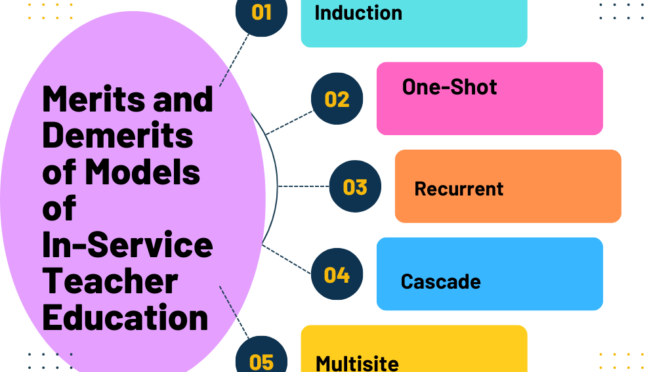
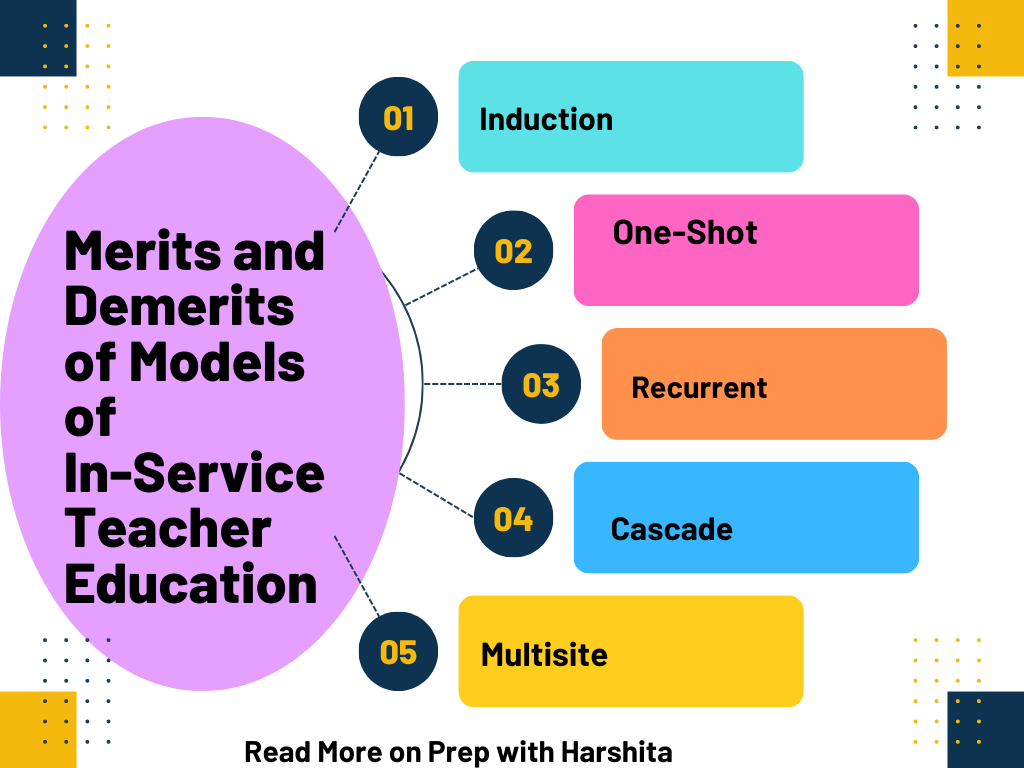
There are several models of in-service teacher training that educational institutions and organizations employ.

Here are the merits and demerits of In-service teacher education models :

  1. Induction:
    Merits:
  • Provides personalized support and mentorship to newly hired teachers.
  • Helps new teachers transition smoothly into their roles.
  • Builds a strong foundation of knowledge and skills.
  • Enhances confidence and efficacy in teaching.

Limitations:

  • Limited to newly hired teachers, may not address the needs of experienced teachers.
  • Can be time-consuming and resource-intensive.
  • May vary in quality and consistency across different schools or districts.
  • The limited duration may not allow for long-term support and development.
  1. One-shot:
    Merits:
  • Provides targeted learning experience on specific topics or skills.
  • Efficient for addressing immediate training needs.
  • Can be cost-effective for organizations with limited resources.
  • Offers flexibility in scheduling and participation.

Limitations:

  • Limited time may not allow for in-depth exploration of topics.
  • Lack of follow-up or ongoing support.
  • May not lead to sustained changes in instructional practices.
  • Dependent on the expertise and effectiveness of the facilitator.
  1. Recurrent:
    Merits:
  • Offers continuous professional development opportunities.
  • Allows for gradual learning and skill development.
  • Provides regular support and feedback.
  • Encourages reflection and improvement over time.

Limitations:

  • Requires consistent commitment from teachers and organizations.
  • May be challenging to schedule regular training sessions.
  • This may lead to fatigue or saturation if the content is repetitive.
  • Limited to the scope and frequency of the training sessions.
  1. Cascade:
    Merits:
  • Enables efficient dissemination of knowledge across multiple levels.
  • Builds a network of trained educators for ongoing support.
  • Can reach a large number of teachers in a short span of time.
  • Promotes collaboration and sharing of best practices.

Limitations:

  • Relies heavily on the quality and effectiveness of the initial training.
  • This may lead to inconsistencies in the interpretation and delivery of content.
  • Difficult to maintain fidelity and ensure accurate transmission of information.
  • May not allow for individualized or personalized support.
  1. Multisite:
    Merits:
  • Facilitates networking and collaboration among educators from different contexts.
  • Provides opportunities for sharing diverse perspectives and best practices.
  • Expands professional networks and connections.
  • Promotes a broader understanding of educational challenges and solutions.

Limitations:

  • Requires coordination and logistical planning across multiple sites.
  • Difficulties in aligning schedules and availability of participants.
  • Limited to the resources and expertise available at each site.
  • May not address specific contextual needs of individual schools.
  1. School-based:
    Merits:
  • Aligns professional development with the specific needs and goals of the school.
  • Fosters a sense of ownership and relevance among teachers.
  • Encourages collaboration and sharing within the school community.
  • Allows for immediate implementation and application of learning.

Limitations:

  • Relies on the availability and expertise of internal resources.
  • May lack exposure to external perspectives and practices.
  • Limited access to specialized or advanced training opportunities.
  • Challenges in coordinating schedules and ensuring participation.
  1. Coursework:
    Merits:
  • Offers structured and systematic professional development.
  • Provides theoretical knowledge and practical application opportunities.
  • Allows for in-depth exploration of specific topics.
  • Recognized certification or qualification upon completion.

Limitations:

  • Requires time and commitment for coursework completion.
  • May not be tailored to the specific needs of individual teachers or schools.
  • Limited opportunities for collaboration and peer interaction.
  • Can be expensive, especially if pursued through higher education institutions.

It’s important to consider these merits and limitations when choosing a model of in-service teacher training, as they can vary in their effectiveness and suitability based on the context and goals of the training program.

Also Visit: Prep with Harshita

Merits and Demerits of Models of In-Service Teacher Education

Also Read: Concept of In-Service Teacher Education

Make your learning journey easy and much interesting