Spiral Curriculum

The Spiral Curriculum is a teaching approach that emphasizes revisiting and building upon previously learned concepts over time. It was developed by Jerome Bruner, a psychologist and educator, in the 1960s.

The idea behind the Spiral Curriculum is that learning should be a continuous, interconnected process. Instead of teaching new concepts in isolation, the Spiral Curriculum emphasizes revisiting and building upon previously learned material, allowing students to deepen their understanding and develop a more sophisticated grasp of the material.

In the Spiral Curriculum, students are first introduced to a basic concept, which is then revisited and built upon in subsequent lessons. Each time the concept is revisited, it is presented in a more complex or nuanced way, allowing students to deepen their understanding and develop a more sophisticated grasp of the material.

This approach is often contrasted with the traditional linear curriculum, in which new concepts are introduced one at a time and each topic is taught in isolation from the others. The Spiral Curriculum is intended to help students make connections between different subjects and develop a more holistic understanding of the material.

Here are some key characteristics of the Spiral Curriculum:

  1. Emphasis on foundational knowledge: It begins with foundational knowledge or basic concepts. These concepts are then revisited and built upon in subsequent lessons, allowing students to develop a deeper understanding of the material.
  2. Building complexity: Each time a concept is revisited, it is presented in a more complex or nuanced way. This allows students to develop a deeper and more sophisticated understanding of the material.
  3. Interdisciplinary connections: It emphasizes connections between different subjects. By revisiting previously learned material, students can make connections between different subjects and develop a more holistic understanding of the material.
  4. Active learning: It emphasizes active learning, such as problem-solving and critical thinking. Instead of just memorizing facts, students are encouraged to engage with the material and think critically about it.
  5. Lifelong learning: It is designed to help students develop a deep and lasting understanding of the material. By emphasizing foundational knowledge, building complexity, and interdisciplinary connections, the Spiral Curriculum helps students develop the skills and knowledge they need to continue learning throughout their lives.

Overall, the Spiral Curriculum is a teaching approach that emphasizes building upon previously learned material over time. By revisiting and deepening their understanding of foundational knowledge, students can develop a more sophisticated understanding of the material and the skills they need for lifelong learning.

Also Read : Eclectic model of Curriculum Design
Spiral Curriculum
Spiral Curriculum

Also Visit : Prep with Harshita
Eclectic Model of Curriculum Design

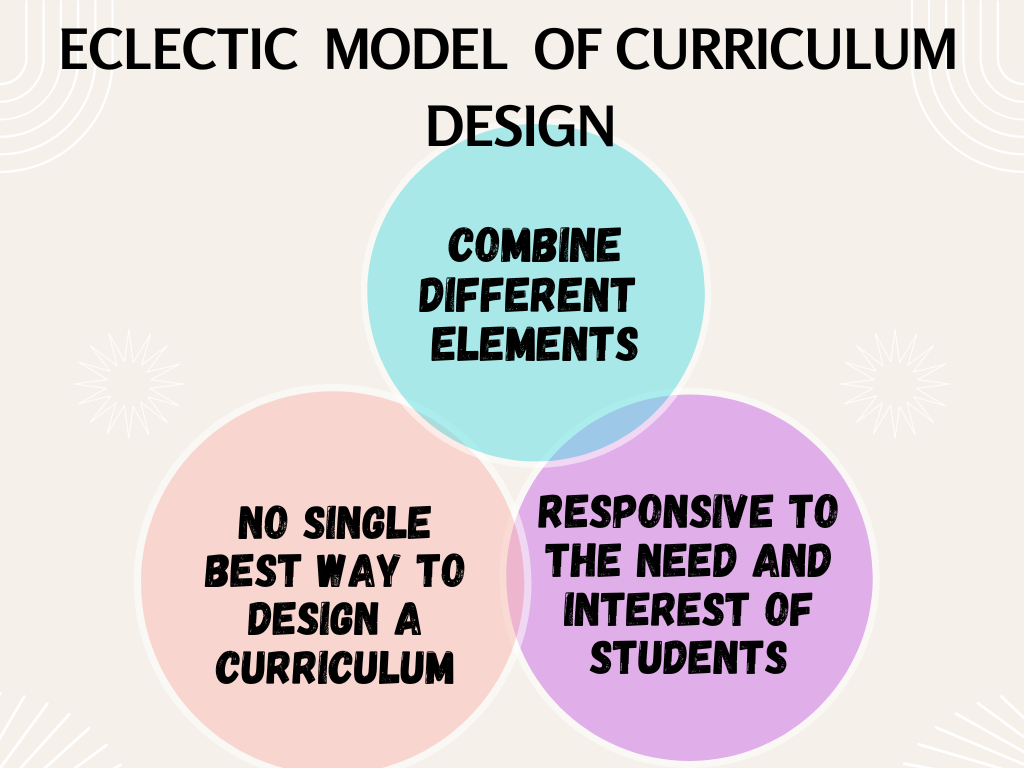
The eclectic model of curriculum design is an approach to designing curricula that combines different elements from various curriculum models and theories to create a unique curriculum that meets the needs of a specific group of learners.

This approach recognizes that there is no single “best” way to design a curriculum and that different learners may benefit from different approaches.

Features of Various Models in Eclectic model :

The eclectic model of curriculum design draws on various curriculum models and theories, including Tyler’s objectives model, Taba’s model of curriculum development, the humanistic model, the social reconstructionist model, and the critical theory model. Here is a more detailed explanation of each of these models:

  1. Tyler’s objectives model: This model emphasizes the importance of defining clear learning objectives and aligning teaching strategies with those objectives. Tyler’s model includes four stages of curriculum design: identifying educational objectives, selecting learning experiences, organizing learning experiences, and evaluating the curriculum.
  2. Taba’s model of curriculum development: This model emphasizes the importance of involving teachers and learners in the curriculum development process and using a problem-solving approach to curriculum design. Taba’s model includes seven stages: diagnosis of needs, formulation of objectives, selection of content, organization of content, selection of learning experiences, organization of learning experiences, and evaluation.
  3. The humanistic model: This model emphasizes the importance of focusing on the needs and interests of learners and creating a curriculum that promotes personal growth and development. The humanistic model includes an emphasis on self-directed learning, creativity, and experiential learning.
  4. The social reconstructionist model: This model emphasizes the importance of using education to promote social justice and address societal issues. The social reconstructionist model includes an emphasis on critical thinking, problem-solving, and action-oriented learning.
  5. The critical theory model: This model emphasizes the importance of addressing power imbalances and promoting social change through education. The critical theory model includes an emphasis on empowering learners to become agents of social change and promoting critical thinking and reflection.

By combining these different approaches, the eclectic model of curriculum design aims to create a curriculum that is responsive to the needs and interests of learners, promotes personal growth and development, and addresses social and cultural issues. It also recognizes the importance of involving teachers and learners in the curriculum development process and using a flexible approach that can adapt to changing needs and circumstances.

Gender Stereotyping

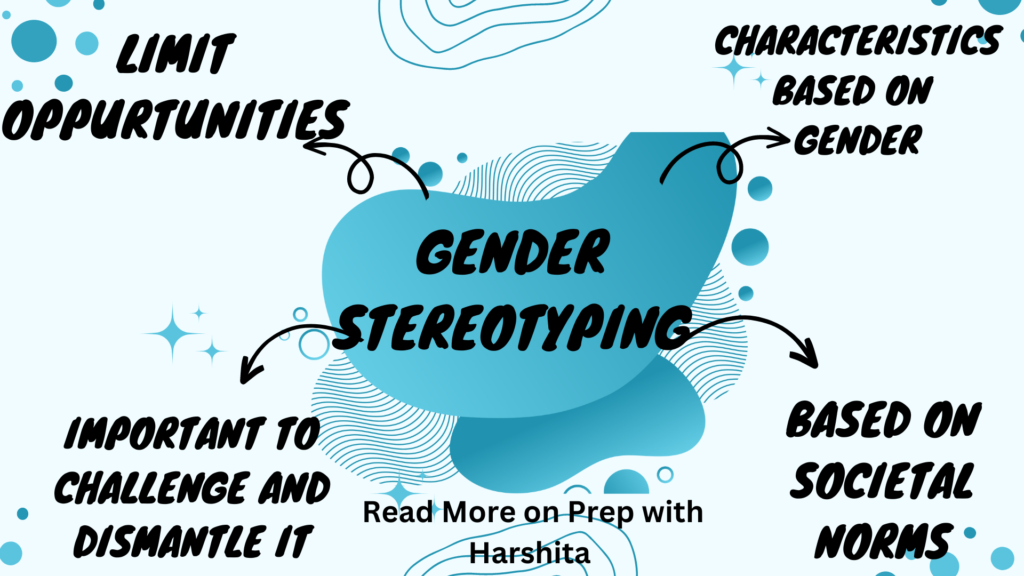
Gender stereotyping refers to the assignment of certain characteristics or attributes to individuals based on their gender.

These stereotypes are often based on societal norms and expectations surrounding gender roles and can be reinforced through various mediums, such as media, culture, and education.

Examples of Female Gender Stereotyping:

  • Women are expected to be nurturing and caring.
  • Women are supposed to be homemakers and take care of children.
  • Women should be interested in fashion, beauty, and other traditionally “feminine” things.
  • Women are often portrayed as passive and submissive in media and advertising.

Examples of Male Gender Stereotyping :

  • Men are expected to be tough and not show emotions.
  • Men are supposed to be the primary breadwinners in a household.
  • Men should be interested in sports, cars, and other “manly” things.
  • Men are often portrayed as aggressive and dominant in media and advertising.

Negative effect of Gender Stereotyping :

  1. Limits opportunities: Gender stereotyping can limit people’s opportunities . It discourage them from pursuing certain careers or interests that are seen as “not appropriate” for their gender. This can lead to missed opportunities for personal growth, career advancement, and societal progress.
  2. Reinforces inequality: Gender stereotyping reinforces the idea that certain genders are superior to others and reinforces gender inequality. This can lead to discrimination and unequal treatment based on gender, which can have negative effects on individuals and society.
  3. Lowers self-esteem: Gender stereotyping can lower the self-esteem of individuals who do not conform to traditional gender roles or expectations. This can lead to feelings of inadequacy, shame, and self-doubt.
  4. Negatively impacts mental health: Gender stereotyping can contribute to mental health issues, such as depression, anxiety, and stress. This is particularly true for individuals who face discrimination and bias due to their gender identity or expression.
  5. Hinders relationship building: Gender stereotyping can create barriers to building meaningful relationships between people of different genders. It can lead to misunderstandings, biases, and stereotypes that can hinder communication and connection.

Gender Stereotypes in India:

  1. Women are supposed to be homemakers: In India, there is a strong expectation that women should be responsible for managing the household and taking care of the family. This can limit women’s opportunities for education and career advancement, as well as perpetuate the idea that women’s primary role is to be a caregiver.
  2. Men are supposed to be breadwinners: Similarly, there is an expectation that men should be the primary breadwinners in the family. This can put pressure on men to provide for their families, often at the expense of their own well-being and personal fulfillment.
  3. Women are supposed to be modest: There is a belief in Indian culture that women should be modest and not draw attention to themselves. This can lead to victim-blaming in cases of sexual harassment or assault, as women are often blamed for “provoking” the attacker by their clothing or behavior.
  4. Women are supposed to be submissive: In Indian culture, women are often expected to be submissive and deferential to men. This can lead to power imbalances in relationships and perpetuate gender-based violence.
  5. Men are supposed to be strong and dominant: Men are often expected to be strong and dominant, and to display their masculinity through physical strength and aggression. This can lead to toxic masculinity and violence against women.

It is important to challenge and dismantle gender stereotypes to promote gender equality and create a more inclusive society where individuals are not limited by their gender.

This can involve creating policies and practices that support work-life balance for all genders, promoting diverse representations of gender roles in media and education, and encouraging individuals to challenge their own assumptions and biases about gender.

Also Read : Gender and Patriarchy

Gender Stereotyping

Also Visit : Prep with Harshita
Equity and Equality in Relation with caste and Class

Equity and equality in relation with caste and Class are important concepts, particularly in relation to promoting social justice and reducing inequality.

Equality :

Equality refers to the idea that all individuals should be treated equally, regardless of their caste or class. This means that people should have equal access to resources, opportunities, and basic human rights, without discrimination or bias.

Equality :

Equity, on the other hand, refers to the idea that people should be given resources and opportunities based on their individual needs and circumstances.

In the context of caste and class:

This means that individuals from historically disadvantaged castes or classes should receive additional support and resources to ensure that they have the same opportunities and outcomes as individuals from dominant or privileged castes or classes.

For example, providing equal access to education for individuals of all castes and classes is an example of equality, as it ensures that all individuals have the same access to education. However, providing additional resources and support, such as scholarships or mentorship programs, to individuals from historically disadvantaged castes or classes is an example of equity, as it provides them with the additional support they may need to overcome barriers and achieve equal outcomes.

It is important to recognize that both equality and equity are necessary to promote social justice and reduce inequality in the context of caste and class. While equality ensures that all individuals are treated equally, regardless of their caste or class, equity ensures that historically disadvantaged groups are given the additional support and resources they need to overcome systemic barriers and achieve equal outcomes.

In the context of Religion Ethnicity :

In the context of religion and ethnicity, this means that individuals from marginalized or historically disadvantaged groups should receive additional support and resources to ensure that they have the same opportunities and outcomes as individuals from dominant or privileged groups.

For example, providing equal access to education for individuals of all religions or ethnicities is an example of equality, as it ensures that all individuals have the same access to education. However, providing additional resources and support, such as scholarships or mentorship programs, to individuals from historically disadvantaged religions or ethnicities is an example of equity, as it provides them with the additional support they may need to overcome barriers and achieve equal outcomes.

In the context of Disability and Religion :

In the context of disability, this means that individuals with disabilities should receive additional resources and accommodations to ensure that they have the same opportunities and outcomes as individuals without disabilities.

For example, providing a ramp to a building is an example of equality, as it provides the same access to individuals with disabilities as it does to individuals without disabilities. However, providing a sign language interpreter in addition to the ramp is an example of equity, as it provides additional support to individuals with disabilities who may require it to have the same opportunities as individuals without disabilities.

It is important to recognize that equity and equality are not mutually exclusive, and both are necessary to promote equal opportunities for individuals with disabilities. While equality ensures that individuals with disabilities have the same access as individuals without disabilities, equity ensures that individuals with disabilities have the additional resources and accommodations they need to overcome barriers and achieve equal outcomes.

Also Read : Gender and Patriarchy

Equity and Equality in relation with Caste and Class

Also Visit : Prep with Harshita

Structural Theory

The Structural Theory of Gender is a social theory that explains gender as a product of social structures and institutions.

This theory argues that gender is not just a personal characteristic, but is shaped by social and cultural practices and power dynamics.

Here are some key features of the Structural Theory of Gender:

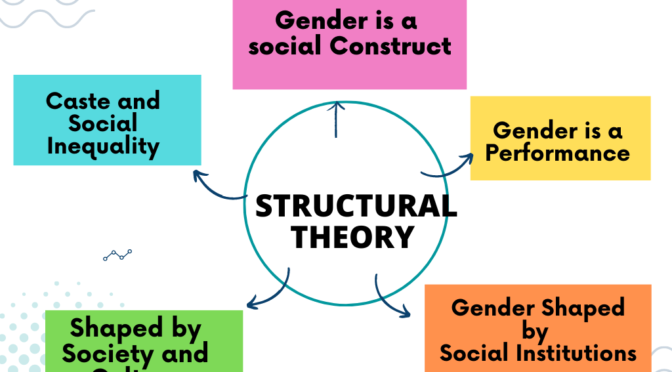
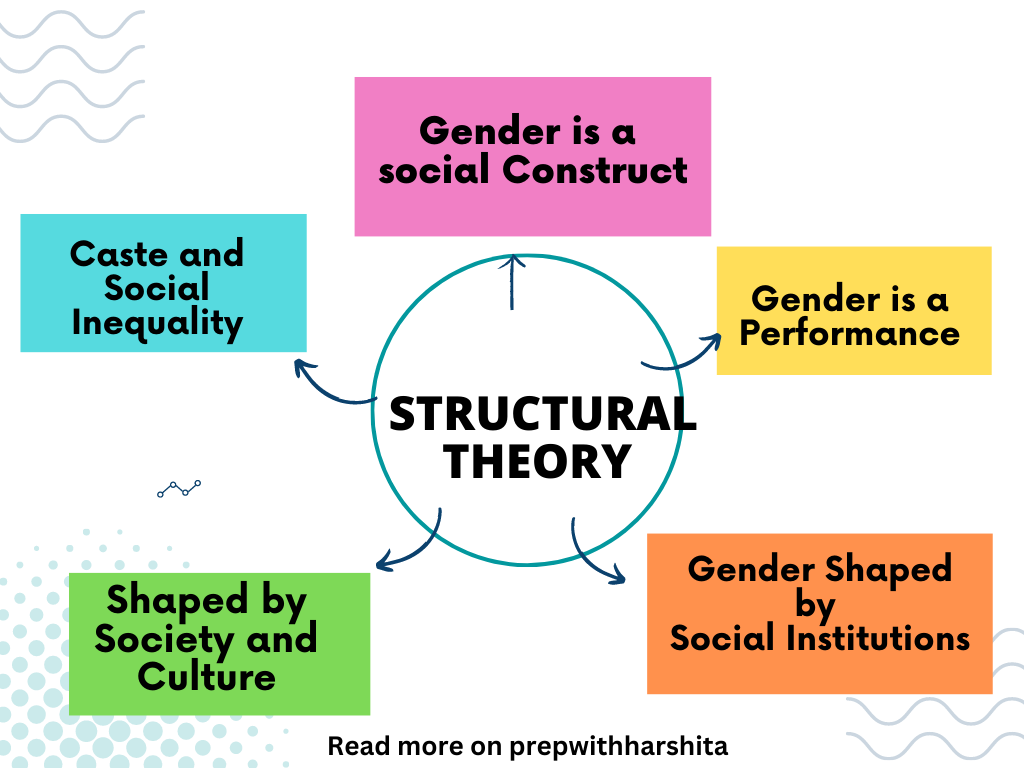
  1. Gender is a social construct: The Structural Theory of Gender posits that gender is a social construct that is created and maintained through social structures and institutions, such as the family, education, media, and the economy.
  2. Gender is a system of inequality: The Structural Theory of Gender argues that gender is a system of inequality that is based on power dynamics and social structures. This system of inequality results in the unequal distribution of resources and opportunities between genders.
  3. Gender is shaped by social institutions: The Structural Theory of Gender argues that social institutions, such as the family, education, and the economy, play a critical role in shaping gender roles and expectations. These institutions reinforce gender norms and expectations, and can perpetuate gender inequality.
  4. Gender is reproduced through socialization: The Structural Theory of Gender posits that gender is reproduced through socialization, the process through which individuals learn the norms and expectations of their society. Socialization can reinforce gender roles and expectations, and can perpetuate gender inequality.
  5. Gender is not static: The Structural Theory of Gender recognizes that gender is not static, but rather is shaped by historical and cultural context. As social structures and institutions change over time, so too can gender roles and expectations.
  6. Intersectionality: The Structural Theory of Gender recognizes that gender intersects with other social categories, such as race, class, and sexuality, to create multiple and intersecting systems of inequality.

Few points regarding the application of structural theory in the Indian context:

  1. Caste and Social Inequality: Structural theory can help us understand how the caste system, which is a social institution unique to India, shapes social inequality and the opportunities available to individuals. The hierarchical nature of the caste system places certain groups at a disadvantage and restricts their access to education, employment, and other resources.
  2. Gender and Patriarchy: It can help us understand how patriarchal structures and gender roles limit opportunities for women in India. For example, the traditional division of labor in households often restricts women’s ability to pursue education or careers outside the home.
  3. Religion and Social Norms: Religion plays an important role in Indian society. This can help us understand how religious norms and beliefs impact individual behavior and decision-making. For example, religious traditions may restrict certain types of food or clothing, which can impact an individual’s social interactions and opportunities.
  4. Political Institutions and Corruption: It can help us understand how political institutions, such as the government and bureaucracy, contribute to corruption in India. Structural factors such as the lack of transparency and accountability in government processes can create opportunities for corruption and limit access to justice for marginalized communities.
  5. Economic Development and Inequality: Structural theory can help us understand how economic development and globalization impact social inequality in India. For example, economic policies that prioritize multinational corporations over local businesses can contribute to a concentration of wealth and resources in the hands of a few, while leaving many others behind.

Also Read : Socialization Theory

Structural Theory of Gender

Also Visit : Prep with Harshita

Make your learning journey easy and much interesting