Tag Archives: mdu m.ed

Gagne’ Hierarchical Theory of Learning

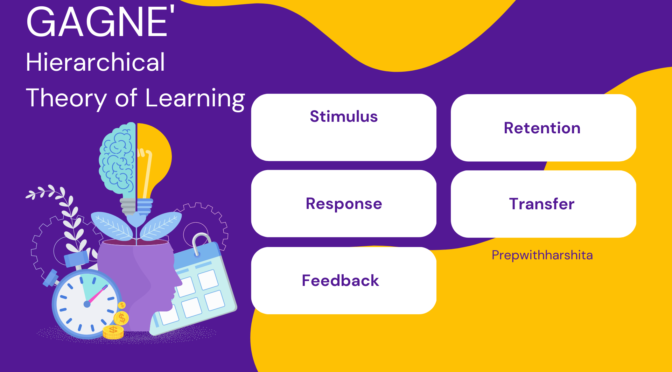
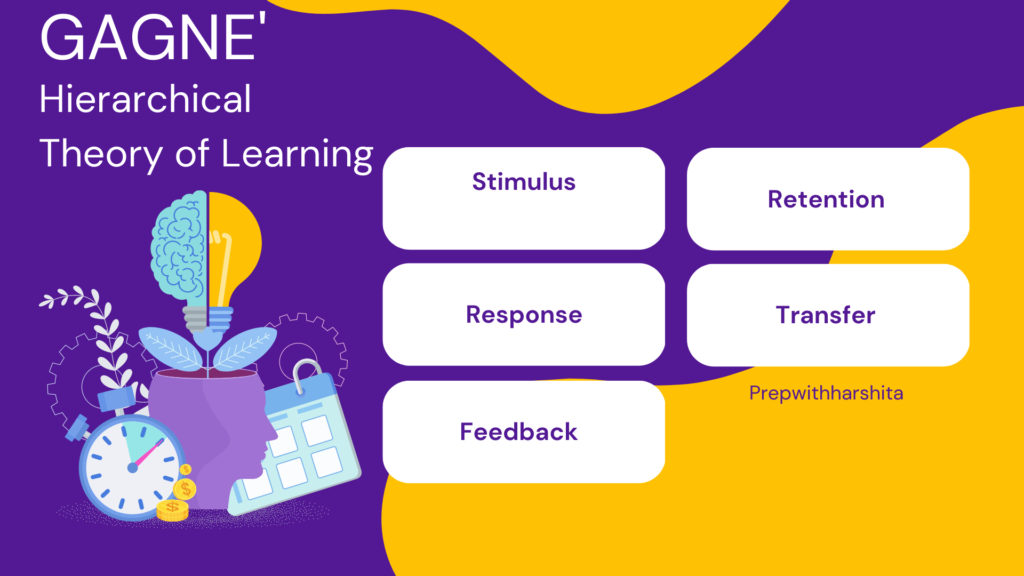
Gagne’s Hierarchical theory of learning is a psychological theory of learning and instruction that was proposed by Robert Gagne in the mid-20th century. It suggests that learning occurs in a series of stages or steps, with each step building on the previous one. The theory proposes that there are five main stages in the learning process:

  1. Stimulus: The learner is presented with a stimulus that captures their attention.
  2. Response: The learner responds to the stimulus in some way.
  3. Feedback: The learner receives feedback on their response, which can either reinforce or modify their behavior.
  4. Retention: The learner retains the information or skill learned, either in their short-term or long-term memory.
  5. Transfer: The learner applies what they have learned in new and different situations.

Gagne’s Hierarchical theory of learning also recognizes the importance of specific mental processes, such as perception, discrimination, and recall, in the learning process. The theory suggests that these processes can be improved through instructional methods such as verbal information, demonstration, and practice.

Overall, Gagne’s Hierarchical theory of learning is a comprehensive theory that emphasizes the importance of the instructional process in facilitating learning and improving performance. The theory has been widely used in the field of education and continues to influence the design of instructional materials and programs.

Features of Gagne’s Hierarchical theory of learning :

  1. Hierarchical organization: Gagne’s theory is organized in a hierarchical manner, with each level building upon the previous one. The nine events of instruction form a progression that begins with gaining the learner’s attention and ends with evaluating learning outcomes.
  2. Matching instruction to outcome: The theory stresses the importance of matching instructional strategies to the type of learning outcome desired. Different instructional strategies are used for cognitive, motor, or verbal skills.
  3. Prior learning experiences: The theory acknowledges that prior learning experiences can influence the effectiveness of instruction.
  4. Transfer of learning: Gagne’s theory recognizes that learners can apply knowledge and skills learned in one situation to new and different situations.
  5. Motivation and attitudes: The theory takes into account the role of motivation and attitudes in the learning process.
  6. Feedback: Gagne’s theory emphasizes the importance of providing feedback to learners to support ongoing improvement and mastery of the material.
  7. Clear and effective instructional design: The theory calls for instructional design that is clear, well-organized, and effective in meeting the learner’s needs.
Gagne Hierarchical Theory of Learning

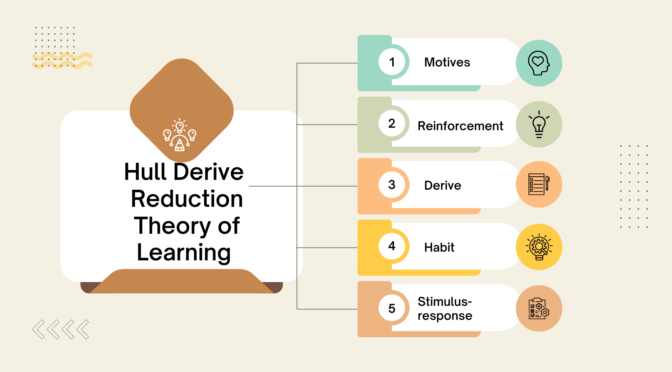
Hull Derive Reduction Theory of Learning

The Hull reduction theory of learning refers to the psychological theory proposed by Clark Hull in the 1930s and 1940s. It suggests that behavior is the result of a combination of drives, habits, and motives that are motivated by a need for reward or satisfaction. The theory proposes that learning occurs through a process of trial and error and reinforcement, and that behavior is shaped by the consequences of our actions.

According to Hull’s theory, the strength of a drive, habit, or motive is determined by its associated reinforcement value, which is in turn based on the subjective value of the reward or satisfaction obtained from the behavior. The theory also suggests that behavior is influenced by the individual’s history of reinforcement, with the frequency and timing of rewards affecting the strength of the drive, habit, or motive.

Hull’s reduction theory of learning is one of the early learning theory in psychology and remains an important influence in the field, particularly in the area of motivation and reinforcement.

Also Visit My YouTube Channel : Prep With Harshita

Features of Hull Reduction Theory of Learning :
  1. Drive reduction: Hull’s theory proposes that behavior is motivated by drives, which are based on physiological needs such as hunger, thirst, and the need for sleep. The theory suggests that the strength of a drive increases with deprivation and decreases with satisfaction.
  2. Reinforcement value: The reinforcement value of a behavior is the subjective value of the reward or satisfaction obtained from the behavior. Hull’s theory suggests that the strength of a drive, habit, or motive is determined by its associated reinforcement value.
  3. Habit strength: Hull’s theory proposes that habits are formed through repeated behavior and reinforcement, and that the strength of a habit increases with repetition and reinforcement.
  4. Stimulus-response relationships: Hull’s theory suggests that behavior is determined by the strength of the drive, habit, or motive, as well as the individual’s response tendencies and the properties of the stimulus.
  5. Trial-and-error learning: Hull’s theory suggests that learning occurs through a process of trial and error and reinforcement, with behavior being shaped by the consequences of our actions.
  6. Drive-reducing stimuli: Hull’s theory proposes that drive-reducing stimuli, such as food or water, have a higher reinforcement value than other stimuli and are more likely to elicit a drive-reducing response.
  7. Drive-increasing stimuli: Hull’s theory suggests that drive-increasing stimuli, such as hunger or thirst, increase the strength of a drive and increase the likelihood of a drive-reducing response.

These features of Hull’s reduction theory of learning highlight its focus on the role of reinforcement and drive in shaping behavior and its emphasis on the interaction between physiological needs and reinforcement in the learning process.

Also Read : Kothari Commission

Hull Derive Reduction Theory of Learning

System Analysis Model of Curriculum

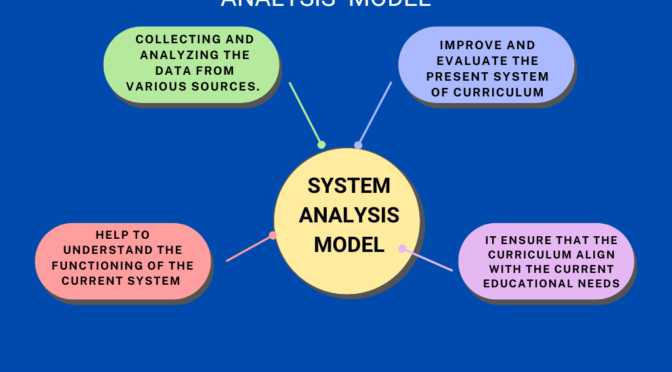
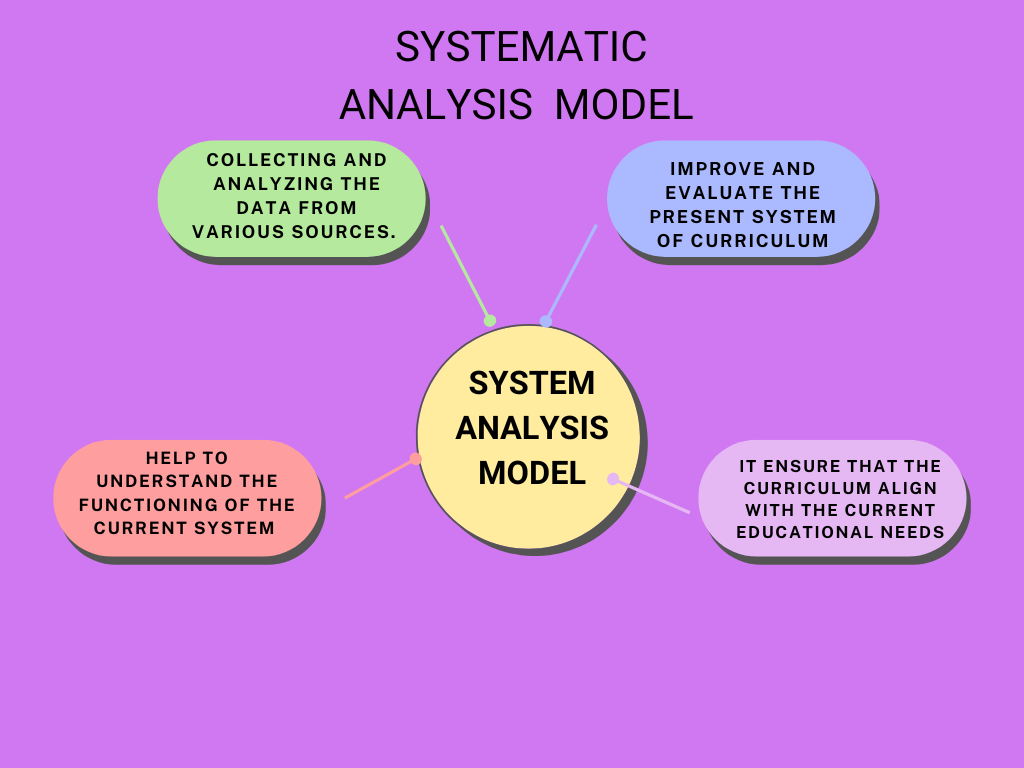
System Analysis Model is used to improve and evaluate the present system of curriculum. A curriculum system analysis model is a framework used to evaluate and improve the curriculum development process in educational institutions.

It examines the various components of the curriculum, such as goals and objectives, content, instructional materials, assessment, and evaluation, which help to identify strengths and weaknesses and suggest improvements in the current system of curriculum.

The aim of this model is to ensure that the curriculum aligns with the needs of students and supports their learning and development in the right direction. The analysis process may involve collecting and analyzing data from various sources, such as teachers, students, and experts, and using it to make decisions about curriculum design and implementation.

The features of a system analysis model for curriculum development include:

  1. Assessment of goals and objectives- It ensure if the goals and objectives are with respect to the need of the students.
  2. Content analysis: The model examines the relevance and accuracy of the content covered in the curriculum, and identifies any gaps.
  3. Instructional materials review: The model evaluates the quality and effectiveness of instructional materials, such as textbooks and technology, used in the curriculum.
  4. Assessment and evaluation: The model assesses the validity and reliability of the assessment and evaluation methods used to measure student learning and progress.
  5. Stakeholder engagement: The model encourages active involvement of key stakeholders, such as teachers, students, parents, and experts, in the curriculum development process.
  6. Data-driven decision making: The model uses data collected from various sources to inform decisions about curriculum design and implementation.
  7. Continuous improvement: The model provides a framework for ongoing evaluation and improvement of the curriculum, to ensure that it remains relevant and effective with changing needs and expectations.
System Analysis Model of Curriculum Development

Need and Importance of Institutional Planning | Institutional Planning & Management | M.Ed

Each school is headed by one head or principal & is solely responsible for institutional planning & management.

More in Video…

Need and Importance of Institutional Planning | Institutional Planning & Management | M.Ed

Also Read : Social Demand Approach | Institutional Planning & Management | M.Ed

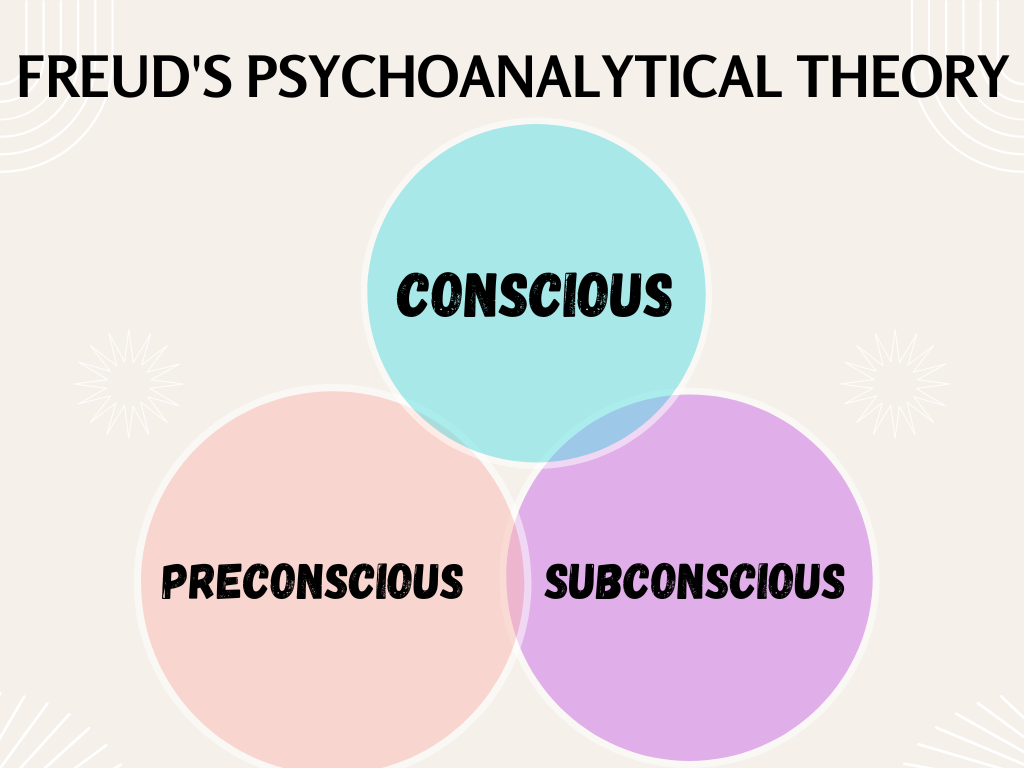
Freud’s Psychoanalytical Theory

Freud’s Psychoanalytical Theory was developed by Sigmund Freud. He is the founder of psychoanalysis, a method of treating mental illness and understanding the human psyche. His theory is based on the idea that the unconscious mind contains repressed thoughts, memories, and desires that shape our behavior.

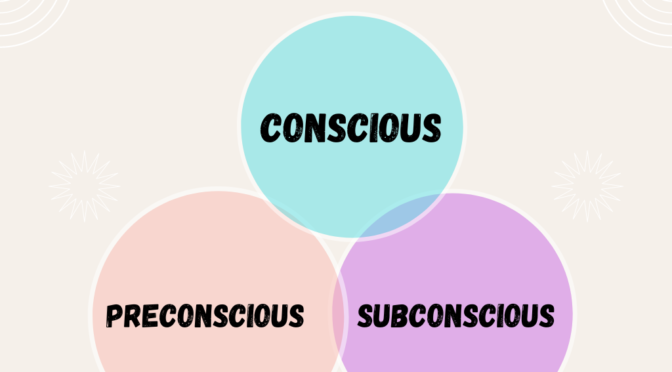
Conscious, Preconscious and Unconscious mind

According to Freud’s theory, the mind is divided into three parts: the conscious mind, the preconscious mind, and the unconscious mind. The conscious mind is what we are aware of at any given moment, while the preconscious mind contains thoughts and memories that can be brought into consciousness with ease. The unconscious mind contains thoughts, memories, and desires that are hidden from consciousness and can only be accessed through psychoanalytic techniques.

Freud believed that the unconscious mind has a powerful influence on behavior and that much of our behavior is motivated by unconscious desires and conflicts. He developed a model of personality consisting of three parts: the id, the ego, and the superego. The id represents our primitive instincts and desires, the ego is the rational part of the mind that mediates between the id and the external world, and the superego is the moral and ethical component that represents societal values and norms.

One of the key concepts in Freud’s theory is the Oedipus complex, which describes a child’s sexual desire for their opposite-sex parent and hostility towards their same-sex parent. This complex is believed to be resolved through identification with the same-sex parent, leading to the development of gender identity and the superego.

Freud’s psychoanalytic theory has been widely debated and criticized, but it remains an important influence on psychology and popular culture. Its influence can be seen in fields such as literary criticism, film studies, and art history, where psychoanalytic techniques are used to interpret works of art and literature.

Also Visit : Prep with Harshita

Freud Psychoanalysis Theory

Freud’s Psychoanalytical Theory | Psychology of Learning and Development | M.Ed

Also Read : Group Guidance